
Nairobi’s widest boulevard — and the street that carries more than a century of colonial ambition, independence symbolism, and living city culture in its asphalt.
What Is Kenyatta Avenue?
Kenyatta Avenue is the main boulevard of Nairobi’s Central Business District — the widest road in the CBD, the most commercially significant thoroughfare in Kenya’s capital, and the street whose name most directly embodies the nation’s transition from colonial rule to independence.
Running west to east from Uhuru Highway (at the edge of Uhuru Park) to Moi Avenue (at the edge of the CBD’s historic core), Kenyatta Avenue is Nairobi’s grand axis — a wide, eight-lane boulevard flanked by the city’s most prestigious hotels, its major banks, its war memorial, its Anglican cathedral, and some of its oldest surviving commercial architecture. It is the street that most visibly represents the idea of Nairobi as a capital city, and the street that three of Kenya’s four presidents have had their names inscribed around, in a symbolic chain that even the city’s own historians find remarkable.
Location: Nairobi Central Business District, Nairobi County, Kenya
Runs from: Uhuru Highway (west, adjacent to Uhuru Park) to Moi Avenue (east)
Former names: Sixth Avenue (to 1931); Delamere Avenue (1931–1964)
Named after: Jomo Kenyatta, first President of the Republic of Kenya
Key intersections: Kimathi Street, Muindi Mbingu Street, Wabera Street, Koinange Street, City Hall Way
Width: Eight lanes — the widest road in the Nairobi CBD, comparable in width to Thika Superhighway
The History of Kenyatta Avenue: Three Names, Three Eras
Sixth Avenue (Early 1900s–1931)
How many of Nairobi’s growing youthful millions remember that this major artery in the heart of Nairobi was first known as the Sixth Avenue 100 years ago? The name was simply functional — the road was the sixth in the numerical grid that early colonial planners laid over the nascent railway depot town. It was part of the basic urban fabric of colonial Nairobi from the very earliest years of the city’s existence.
Sixth Avenue connected two streets: Princess Elizabeth Way (now Uhuru Highway) and Government Road (now Moi Avenue). Even in its earliest incarnation, the road performed exactly the function it performs today — linking the outer western boundary of the city centre to its administrative eastern core. Its extraordinary width was not accidental. Kenyatta Avenue, with its ‘concrete island’ smack in the middle of the multi-lane, was designed wide enough to allow carriages — and later, motor vehicles — to manoeuvre comfortably in both directions simultaneously, a design ambition that reflected colonial Nairobi’s aspirations to grandeur.
Delamere Avenue (1931–1964)
When Hugh Cholmondeley, 3rd Baron Delamere — the most powerful and controversial figure among Kenya’s white settler community — died in 1931, the colonial administration renamed Sixth Avenue in his honour. It started out as Sixth Avenue, to be renamed Delamere Avenue after Lord Delamere’s death in 1931 as per University of Texas at Austin blog.
Who was Lord Delamere? Hugh Cholmondeley, 3rd Baron Delamere (1870–1931), made his first trip to Africa in 1891 to hunt lions in British Somaliland. He returned to East Africa annually for the hunt and settled in Kenya in 1901. Once in Kenya, he became one of the largest landholders in the colony and the undisputed political champion of white settler interests — a man who fought ferociously for policies that restricted African land rights, excluded Africans and Indians from political power, and enshrined white settler supremacy in colonial law. An 8-foot bronze statue of the Baron was also erected on the street, in front of the New Stanley Hotel.
By the 1930s, the representative, historicizing architecture of its government and commercial buildings made it look like a slice of London — an architectural embodiment of British claims to permanent colonial rule of Kenya. This was Delamere Avenue at its colonial zenith: a boulevard of banks, insurance companies, department stores, hotels, and government offices that collectively projected the confidence — and the racial exclusion — of the British Empire in East Africa.
The Delamere Statue and Its Removal
Delamere’s statue, prominently placed on the avenue named for him, was the first of Nairobi’s colonial-era monuments to be removed in 1963 in the transition to Kenyan independence. The Delamere family asked the government to remove it. It was relocated to Soysambu ranch in Elementaita, Naivasha, where Delamere’s descendants — who took Kenyan citizenship after independence — still farm today. The Delamere dairy brand, ubiquitous in Kenyan supermarkets, keeps the family name alive in a curious post-colonial echo.
Kenyatta Avenue (1964–Present)
In 1964, one year after Kenyan independence, Delamere Avenue was renamed Kenyatta Avenue in honor of Jomo Kenyatta (ca. 1897–1978), Kenya’s first president. The renaming was the most symbolically charged act of post-independence street nomenclature in Nairobi: it becomes clear why Delamere Avenue was the very first Nairobi street to be renamed in an effort to cleanse the city from the legacy of its former colonial masters.
The street’s new name inaugurated a remarkable onomastic chain that still provokes discussion among Nairobi’s historians. Kenyatta Avenue starts at Moi Avenue. Where does it end? It ends on Uhuru Highway. Kenyatta Avenue links Moi Avenue to Uhuru Highway. Interestingly, the three major avenues symbolically name and link three Presidents of Kenya just like that! Moi Avenue (named for the second president), Kenyatta Avenue (the first), and Uhuru Highway (named for “freedom” in Swahili, though subsequently associated with the fourth president, Uhuru Kenyatta, son of Jomo) — the entire western half of the CBD’s road system traces a presidential genealogy in concrete and tarmac.
Landmarks and Attractions on Kenyatta Avenue
1. The Sarova Stanley Hotel (Corner of Kenyatta Avenue and Kimathi Street)
What it is: Sarova Stanley is a heritage luxury hotel that seamlessly blends timeless elegance with modern event capabilities. As Kenya’s first luxury hotel, established in 1902, its rich legacy, award-winning hospitality, and central location make it the venue of choice for international conferences, corporate meetings, and upscale social events.
History: The Sarova Stanley Hotel stands as Kenya’s first luxury hotel, established in 1902 when Nairobi was merely a railway halt. Named after Welsh explorer Sir Henry Morton Stanley, famous for his search for missionary David Livingstone, the hotel has evolved from a modest guesthouse to an iconic institution that seamlessly blends Victorian grandeur with modern luxury.
The hotel’s origins trace back to 1902 when English businesswoman Mayence Bent opened the Victoria Hotel, consisting of four sparsely appointed rooms above Tommy Wood’s general store. Mayence managed the store’s post office while working as a dressmaker and milliner, and brought fresh butter and vegetables from her husband’s farm in Kikuyu to serve guests.
The Stanley was a boarding house on Victoria Street (the current Tom Mboya Street), but was shifted and constructed on its present site in 1913 and named the New Stanley. The current building dates from a 1959 reconstruction that gave it the form it retains today, though subsequent renovations have modernised its interiors while preserving its Victorian-inspired exterior character.
The Thorn Tree Café: One of Africa’s most legendary traveller institutions was the Thorn Tree Café at the Sarova Stanley. This café had a single acacia tree at the centre where travellers would leave notes, letters and messages for fellow travellers pinned to the trunk. That tradition became so popular that the thorn tree became an icon for African travel. Before the internet, Nairobi-bound travellers would pin notices to the Thorn Tree’s trunk — seeking travel companions, offering rides, asking for information on routes, or simply leaving word for friends. The tradition spawned the original Thorn Tree travel forum on the Lonely Planet website, one of the first major online travel communities. The café still operates today as a vibrant open-air bistro on the ground floor of the Sarova Stanley, though the original acacia tree was replaced after dying of age.
Notable guests: Kenya’s first luxury hotel, Sarova Stanley opened its elegant doors in 1902. Since then, it has been making history — hosting royal safaris and legendary personalities such as Edward Prince of Wales and Ernest Hemingway.
Address: Corner of Kenyatta Avenue and Kimathi Street | Website: sarovahotels.com/stanley-nairobi
2. The Native War Memorial (Askari Monument) — Kenyatta Avenue Central Island
What it is: One of the most historically complex monuments in Nairobi, the Native War Memorial stands on the central island of Kenyatta Avenue and commemorates the African soldiers and porters who served in the East African campaign of the First World War.
History and design: The War Memorial Monument (Native War Memorial) commemorates the service of Africans fighting for the British forces in defense of the British Empire during the East African campaign of the First World War, and in particular the almost 50,000 African soldiers who perished in the war. The monument is located along Kenyatta Avenue in the center of Nairobi. The three African men represent a porter, an askari, and a gun carrier; none of them are identified by name or rank. The monument was designed by British sculptor James Alexander Stevenson (1881–1937) in 1924.
The monument was set up on site in 1928 in honour of the Kings African Rifles and Carrier Corps who served in World War 1. The inscription carved into its base reads: “This is to the memory of the native African troops who fought; to the carriers who were the hands and feet of the army and to all other men who served and died for their king and country in Eastern Africa in the Great War, 1914–1918. If you fight for your country, even if you die, your sons will remember your name.” as reported by Business Daily
Historical controversy: The monument is simultaneously a tribute and a document of colonial contradiction. The inscription, full of colonialist pathos, misses the point that Kenyans did not fight for their own country but for a foreign colonial power. The three figures are unnamed and unranked — collective, anonymous representatives of the hundreds of thousands of African men recruited, coerced, or conscripted into service. The African Memorial at Nairobi stands on Kenyatta Avenue in the centre of town, opposite the Memorial Hall Obelisk, and is maintained by the Commonwealth War Graves Commission (CWGC). FlickrCommonwealth War Graves Commission
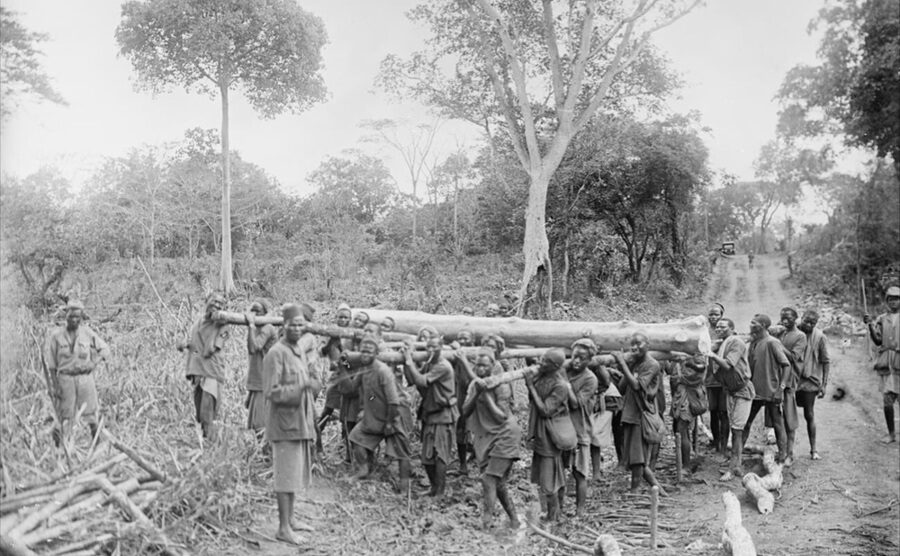
Visiting: The monument stands on the central reservation of Kenyatta Avenue, accessible on foot from the pedestrian crossings. It is publicly viewable at all times. No entry fee.
3. The Nairobi Serena Hotel (Kenyatta Avenue at Processional Way)
Tucked beside Central Park and surrounded by lush gardens, Nairobi Serena Hotel is a sanctuary of elegance and calm, just moments from the city’s vibrant heart. Ideally located near the Central Business District and a short drive from Jomo Kenyatta International Airport, the hotel also places you close to Nairobi’s key diplomatic, corporate, and cultural landmarks.
The Serena is one of Nairobi’s two finest five-star hotels and differs from the Sarova Stanley in atmosphere — where the Stanley is colonial-heritage and city-centre bustle, the Serena is garden-enclosed, tranquil, and Pan-African in design. Influenced by design traditions from Ethiopia, the Maghreb, West Africa, and East Africa, the hotel embodies quiet sophistication and warm hospitality in every detail. The Serena sits at the western end of Kenyatta Avenue where it approaches Uhuru Highway, overlooking Central Park, and is two minutes by foot from the Kenyatta International Convention Centre (KICC.
Address: Kenyatta Avenue at Processional Way | Website: serenahotels.com/nairobi
4. All Saints’ Cathedral (Kenyatta Avenue, opposite Nairobi Serena Hotel)
All Saints’ Cathedral is located on Kenyatta Ave, opposite Nairobi Serena Hotel. One of Nairobi’s two principal Christian cathedrals (alongside the Cathedral Basilica of the Holy Family on City Hall Way), All Saints’ is the seat of the Anglican Diocese of Nairobi and a distinctive piece of ecclesiastical architecture in the middle of the city’s busiest commercial corridor.
The cathedral has been a feature of this end of Kenyatta Avenue since the early colonial era, and its stone Gothic structure — relatively restrained by the standards of European cathedral architecture but unmistakably ecclesiastical against Nairobi’s modern commercial fabric — marks the transition between the urban CBD to the east and the calmer, greener western approaches to Uhuru Park and Central Park.
Entry: Open to visitors during daylight hours. Services are held on Sundays and weekdays. Entry free.
5. Central Park and the Nyayo Monument
Immediately adjacent to the western end of Kenyatta Avenue, Central Park is Nairobi’s formal civic green space — smaller and more manicured than Uhuru Park, which lies across Uhuru Highway to the south. Within Central Park stands the Nyayo Monument, one of Nairobi’s more historically freighted landmarks.
The Nyayo Monument in Central Park was erected to commemorate 10 years of former president Moi’s rule in 1988 and 25 years of independence. The ceremony featured 10 heads of state at a cost Sh300 million. The four-sided obelisk in Italian marble became something of an emblem of the Moi era’s grandiosity — the Sh100 note issued by the Central Bank of Kenya in 1989 featured the monument on one side.
6. Kipande House (Kenyatta Avenue)
One of the most sobering historical addresses on Kenyatta Avenue is Kipande House — a building whose colonial-era function gives it a grim significance in Kenyan history. Kipande House used to be a railway depot. The Africans working for the colonial masters in Nairobi used to come here to be registered and then issued with identification cards. That is how it got its name.
The kipande system was the colonial regime’s method of controlling African movement and labour — every African adult male was required to carry a metal identification container (kipande) hung around the neck, recording their employment history, employer’s assessments of their performance, and personal details. Resistance to the kipande system was one of the early flashpoints of anti-colonial organisation in Kenya. The building that administered this system of control is now occupied by Kenya Commercial Bank (KCB) — a transition from colonial administration to post-independence commercial use that the building’s sturdy Victorian architecture has absorbed without visible discomfort.
7. The General Post Office — Kenyatta Avenue
The General Post Office (GPO) on Kenyatta Avenue is one of the CBD’s most practical and historically resonant addresses. Built in the colonial era and still operating as Nairobi’s main post office, the GPO building is a functional relic of the era when postal communications were the dominant medium for long-distance correspondence and the post office was the most important civic building in any colonial town after the government offices and the courthouse.
For today’s visitor, the GPO is of practical value: it houses Poste Restante services, sells stamps, and processes international parcels. For the historically minded, it is a reminder of Nairobi’s origins as a communications and administrative hub — a city built on the movement of people, goods, and information along the Uganda Railway corridor.
8. The Financial District: Banks of Kenyatta Avenue
Another notable feature of Kenyatta Avenue is the multitude of banks that front the avenue. Kenya Commercial Bank, Family Bank, National Bank, Barclays Bank, Equity Bank, and additional financial institutions are among these banks.
Kenyatta Avenue is, in functional terms, the financial spine of Kenya. The concentration of bank head offices and major branches along its length — plus the proximity of the Nairobi Securities Exchange, the Central Bank of Kenya, and major insurance companies on adjacent streets — makes this corridor the undisputed centre of Kenyan finance. The banking district’s presence here is not accidental: it traces directly to the colonial-era financial institutions that occupied these buildings when the street was still Delamere Avenue, and the post-independence Kenyanisation of those institutions that transferred ownership without moving the furniture.
What Is Kenyatta Avenue Famous For?
Kenyatta Avenue is famous for several distinct things, depending on who you ask:
For Nairobi’s business community, it is the financial heart of the city — the street where the most important banks, law firms, insurance companies, and corporate offices have their addresses.
For historians, it is the street whose three names — Sixth Avenue, Delamere Avenue, Kenyatta Avenue — compress the entire arc of Kenya’s colonial and post-colonial experience into a single strand of tarmac.
For tourists, it is the location of two of Kenya’s most historic and prestigious hotels: the Sarova Stanley (1902) and the Nairobi Serena, with the War Memorial, All Saints’ Cathedral, and Central Park as additional draws.
For everyday Nairobians, it is simply the big road — the eight-lane boulevard that you cross on your way somewhere else, whose central island you wait on while traffic thunders past, and whose name appears on every map as the defining east-west axis of the city centre.
Kenyatta Avenue: Frequently Asked Questions
What is Kenyatta Avenue in Nairobi?
Kenyatta Avenue is the main boulevard of Nairobi’s Central Business District. It is the widest road in the CBD — eight lanes wide — and runs west to east from Uhuru Highway to Moi Avenue. It is home to the Sarova Stanley Hotel (Kenya’s first luxury hotel), the Nairobi Serena Hotel, All Saints’ Cathedral, the Native War Memorial, major bank headquarters, and the General Post Office. It was originally known as Sixth Avenue and later as Delamere Avenue, before being renamed in 1964 to honour Jomo Kenyatta, Kenya’s first president.
Why is it called Kenyatta Avenue?
In 1964, one year after Kenyan independence, Delamere Avenue was renamed Kenyatta Avenue in honor of Jomo Kenyatta (ca. 1897–1978), Kenya’s first president. The renaming was the first act of post-independence street renaming in Nairobi — a deliberate and symbolic erasure of the name of Lord Delamere, the most powerful figure of white settler politics in colonial Kenya, and its replacement with the name of the man who had led the nation to independence.
What was Kenyatta Avenue previously called?
Kenyatta Avenue has had three names. It began as Sixth Avenue in the early colonial period — a purely functional numerical designation in the railway depot town’s original street grid. It was renamed Delamere Avenue after Lord Delamere’s death in 1931. At independence in 1963, Lord Delamere’s statue — which had stood in front of the New Stanley Hotel — was removed, and in 1964 the street was renamed Kenyatta Avenue.
How wide is Kenyatta Avenue?
The widest street in the Nairobi CBD happens to be Kenyatta Avenue, with eight lanes, just like Thika Superhighway. This exceptional width — designed during the colonial period — gives Kenyatta Avenue its distinctive boulevard character, with a central island that accommodates the War Memorial and provides a visual focal point along the road’s length.
What is the War Memorial on Kenyatta Avenue?
The War Memorial Monument (Native War Memorial) commemorates the service of Africans fighting for the British forces in defense of the British Empire during the East African campaign of the First World War, and in particular the almost 50,000 African soldiers who perished in the war. The three African men represent a porter, an askari, and a gun carrier; none of them are identified by name or rank. The monument was designed by British sculptor James Alexander Stevenson in 1924 and installed on the central island of Kenyatta Avenue in 1928. Entry is free and the monument is viewable at all times.
What is the oldest hotel on Kenyatta Avenue?
The Sarova Stanley Hotel, at the corner of Kenyatta Avenue and Kimathi Street, is not only the oldest hotel on Kenyatta Avenue but the oldest luxury hotel in Kenya. The Sarova Stanley Hotel stands as Kenya’s first luxury hotel, established in 1902 when Nairobi was merely a railway halt. It has hosted guests including the Prince of Wales and Ernest Hemingway, and its ground-floor Thorn Tree Café became one of the most famous travellers’ meeting points in Africa
What happened to the Lord Delamere statue on Kenyatta Avenue?
Delamere had erected a statue at an “island” between Kenyatta Avenue and Kimathi Street outside the New Stanley Hotel. However, in the early 1930s, the Delamere family asked the government to remove it. It was relocated to Soysambu ranch in Elementaita, Naivasha. The statue was the first colonial-era monument removed from Nairobi at independence, a symbolic gesture that preceded the street’s own renaming.
What streets branch off Kenyatta Avenue?
Four streets branch out of Kenyatta Avenue, namely Kimathi Street, Muindi Mbingu Street, Wabera Street and Koinange Street, which had originally been named after the first, second, third and fourth colonial commissioners who were later given legislative powers to become governors. All four branch streets have since been renamed — Kimathi Street honours Mau Mau freedom fighter Dedan Kimathi; the others carry the names of figures from Kenya’s post-independence history.
Where does Kenyatta Avenue start and end?
Kenyatta Avenue runs from Moi Avenue at its eastern end (where it meets the heart of the historic CBD, near the Hilton Hotel and the Kenya National Archives) to Uhuru Highway at its western end (where it meets Uhuru Park and the Central Park area near the Nairobi Serena Hotel and All Saints’ Cathedral). Kenyatta Avenue links Moi Avenue to Uhuru Highway — the three major avenues symbolically name and link three Presidents of Kenya just like that!
Is All Saints’ Cathedral on Kenyatta Avenue?
Yes. All Saints’ Cathedral is located on Kenyatta Ave, opposite Nairobi Serena Hotel. It is the seat of the Anglican Diocese of Nairobi and one of Nairobi’s principal churches. It is open to visitors during daylight hours
What is near Kenyatta Avenue?
Kenyatta Avenue is centrally located in the CBD and within easy walking distance of: the Kenyatta International Convention Centre (KICC) on Harambee Avenue (~500m); Uhuru Park and Central Park (at the western end); City Hall and the Supreme Court on City Hall Way (adjacent); Jeevanjee Gardens on Muindi Mbingu Street (~200m north); the Kenya National Archives on Moi Avenue (at the eastern end); the Cathedral Basilica of the Holy Family on City Hall Way (~100m); and McMillan Memorial Library on Banda Street (~300m).
The Symbolic Significance of Kenyatta Avenue: Three Presidents in Three Names
No street in Nairobi — and few streets anywhere in East Africa — carries the density of political symbolism concentrated into Kenyatta Avenue’s history and geography. Consider what the street’s three names represent:
Sixth Avenue — the anonymous, functional designation of a colonial railway depot grid, which saw Nairobi as a supply point for an imperial project and its streets as nothing more than numbered infrastructure.
Delamere Avenue — the ideological crystallisation of white settler supremacy, named for the man who most forcefully articulated the belief that Kenya was, and should remain, a white man’s country. The bronze statue of Delamere standing in front of the New Stanley Hotel was a literal monument to that belief.
Kenyatta Avenue — the post-independence declaration that the city, and the country, belonged to its African majority. Named for the man who had been imprisoned by the British colonial government for nine years and emerged to become the first president of an independent Kenya, the street’s new name was as much a verdict on its colonial past as it was a tribute to its future.
Kenyatta Avenue links Moi Avenue to Uhuru Highway. In the city’s street nomenclature, the three presidents whose names frame this corridor — Kenyatta (the first), Moi (the second), and Uhuru (Kenyatta’s son, the fourth, whose name also means “freedom” in Swahili) — are literally connected. Walk the length of Kenyatta Avenue and you walk from one president’s name to another, with the founding president’s own name beneath your feet the entire way.
Eating and Drinking on and near Kenyatta Avenue
Kenyatta Avenue’s commercial density means food options range from street-corner mandazi to five-star hotel dining within the same few blocks:
Thorn Tree Café (Sarova Stanley, Kenyatta Avenue): The most famous café address in Nairobi. Open-air bistro on the ground floor of the Stanley, serving breakfast, lunch, and dinner. The Thorn Tree’s legacy as a traveller’s meeting point gives it an atmosphere no competitor can replicate. Great for coffee, all-day meals, and people-watching on one of Nairobi’s best terraces. Expect KES 800–2,500 per person for a full meal.
Café Deli (680 Hotel, Kenyatta Avenue): A reliable local café chain with a central Kenyatta Avenue location. Good coffee, pastries, sandwiches, and light meals at mid-range prices. Popular with CBD office workers.
Bakers Inn (Emperor Plaza, Kenyatta Avenue): A Kenyan bakery chain with an excellent range of affordable pastries, filled rolls, and hot drinks. Ideal for a quick breakfast or snack on the go.
Nairobi Serena dining (western end of Kenyatta Avenue): The Serena’s restaurants serve high-end Pan-African and international cuisine in an elegant garden setting. The buffet breakfast is a Nairobi institution among visiting heads of state and senior diplomats.
Street food: Roasted maize, mandazi, and samosas are sold from carts along the central island and pavement of Kenyatta Avenue throughout the day at KES 20–60 per item.
Getting to and Around Kenyatta Avenue
On Foot
Kenyatta Avenue is entirely walkable. The full length from Moi Avenue to Uhuru Highway is approximately 800 metres — a comfortable 10–12 minute walk. The central island is accessible via pedestrian crossings at major intersections. The pavement on both sides of the avenue is wide enough to accommodate the heavy pedestrian traffic of the CBD.
The key challenge for pedestrians is crossing the eight lanes of moving traffic — use designated crossing points and wait for clear gaps. The central island, while useful as a crossing waypoint, is not a comfortable place to linger due to traffic noise and fumes.
By Matatu
Kenyatta Avenue is served by matatu routes approaching from all major directions. The Kencom stage on adjacent City Hall Way (immediately north of Kenyatta Avenue, at the Hilton Hotel/Archives junction) is one of the CBD’s busiest matatu departure points, serving western Nairobi destinations including Westlands, Ngong Road, Kibera, and Riruta. The OTC stage on Haile Selassie Avenue (at the southeastern end of the Kenyatta Avenue corridor) serves Eastlands destinations. Matatu fares within the CBD and to nearby suburbs run KES 20–100.
By Ride-Hailing
Uber and Bolt both operate throughout the Kenyatta Avenue corridor. Note that peak-hour pickup on Kenyatta Avenue itself can be slow due to traffic congestion — your driver may ask you to meet on a side street. Kimathi Street and Koinange Street (both branching off Kenyatta Avenue) are typically easier pickup points.
Parking
Kenyatta Avenue has very limited on-street parking due to its bus lane and traffic management designations. The Sarova Stanley provides valet parking for guests. The 680 Hotel has limited parking. Paid parking facilities are available on adjacent streets — City Hall Way, Muindi Mbingu Street, and Kimathi Street all have parking facilities within easy walking distance.
What to See Near Kenyatta Avenue
Kenyatta International Convention Centre (KICC) (~500m east on Harambee Avenue): The defining cylindrical tower of the Nairobi skyline, with a public viewing deck offering panoramic city views.
Cathedral Basilica of the Holy Family (City Hall Way, adjacent to Kenyatta Avenue’s eastern end): The cathedral is the seat of the archdiocese of Nairobi and can accommodate up to 4,000 people. It is 98 feet tall with stainless steel and Carrara marble details framing its stained glass windows.
Uhuru Park (across Uhuru Highway from the western end of Kenyatta Avenue): Nairobi’s main civic park — green, vast, and the site of major public gatherings, political rallies, and daily recreation.
Jeevanjee Gardens (Muindi Mbingu Street, ~200m north of Kenyatta Avenue mid-point): The 5-acre historic public park donated in 1906. Free to enter.
Kimathi Street (branching north from Kenyatta Avenue near the Sarova Stanley): Named after Mau Mau freedom fighter Dedan Kimathi, Kimathi Street hosts the Dedan Kimathi statue opposite the former Hilton Hotel, along with several of Nairobi’s best mid-range restaurants, coffee shops, and the Nairobi Gallery (housed in the historic building at the corner of Kenyatta Avenue — the former PC’s Office).
McMillan Memorial Library (Banda Street, ~300m north): One of Nairobi’s oldest libraries (1931), housing an important Kenya-related collection and a functioning research library open to visitors.
Practical Visitor Information
Best time to visit: Kenyatta Avenue is most animated on weekday mornings and early afternoons (8 AM–3 PM) when the financial district is in full operation. Saturday mornings are busy with shoppers and weekend visitors to the CBD. Sunday is the quietest day — many shops and offices are closed, and the avenue feels different in character: calmer, emptier, more conducive to unhurried walking.
How long to spend: A focused walk along the full length of Kenyatta Avenue — stopping at the War Memorial, the Sarova Stanley’s Thorn Tree, the GPO, and All Saints’ Cathedral — takes approximately 1.5 to 2 hours. Combined with adjacent streets (Kimathi Street for the Dedan Kimathi statue; City Hall Way for the Holy Family Cathedral; Muindi Mbingu Street for Jeevanjee Gardens), a comprehensive CBD walking circuit anchored by Kenyatta Avenue takes 3–4 hours.
Photography: The War Memorial, Sarova Stanley façade, and All Saints’ Cathedral are all freely photographable from the public pavement. The central island War Memorial is most effectively photographed from the ground level crossings. The Sarova Stanley’s Thorn Tree Café, if you are eating or drinking there, affords excellent street photography angles of the avenue.
Safety: Kenyatta Avenue is a major CBD thoroughfare and is generally safe during daylight business hours. The standard CBD precautions apply: keep your phone in your pocket when not actively using it, hold bags close to the body, and avoid the display of expensive items. The area around the Sarova Stanley, the Serena, and All Saints’ Cathedral is among the more policed and pedestrian-dense sections.
Kenyatta Avenue at a Glance
| Detail | Information |
|---|---|
| Official name | Kenyatta Avenue |
| Former names | Sixth Avenue (to 1931); Delamere Avenue (1931–1964) |
| Named after | Jomo Kenyatta, 1st President of Kenya |
| Renamed | 1964, one year after independence |
| Location | Nairobi Central Business District |
| Runs from | Uhuru Highway (west) to Moi Avenue (east) |
| Length | Approximately 800 metres |
| Width | 8 lanes — widest road in Nairobi CBD |
| Key branches | Kimathi Street, Muindi Mbingu Street, Wabera Street, Koinange Street |
| Key landmarks | Sarova Stanley Hotel, Nairobi Serena Hotel, Native War Memorial (Askari Monument), All Saints’ Cathedral, Kipande House (KCB), General Post Office, Central Park, Nyayo Monument |
| Notable hotels | Sarova Stanley (1902, Kenya’s first luxury hotel), Nairobi Serena Hotel (5-star) |
| Key events in history | Renamed from Delamere Avenue at independence (1964); Delamere statue removed (1963); War Memorial installed (1928) |
| Presidential connection | Linked to three Kenyan presidents: Kenyatta (the avenue itself), Moi (Moi Avenue at eastern end), Uhuru/Freedom (Uhuru Highway at western end) |
| Best for | Heritage walking, banking and business, hotel stays, monuments, colonial architecture |
| Transport | Kencom matatu stage (City Hall Way, adjacent); Uber/Bolt throughout; limited parking on side streets |
| Nearby attractions | KICC (~500m), Uhuru Park (western end), Jeevanjee Gardens (~200m), Cathedral Basilica of Holy Family (adjacent), McMillan Library (~300m), Dedan Kimathi Statue (Kimathi Street) |
Information current as of June 2026. Business hours, hotel rates, and entry fees may change. Verify current details with individual institutions before visiting.