
The Green City
in the Sun
Nairobi is Kenya’s capital city, East Africa’s major commercial center, a diplomatic and United Nations city, a regional transport hub, a safari gateway, and one of the most unusual capitals in the world — because Nairobi National Park sits directly beside its urban edge.
A capital. A county.
A wildlife city.
A story unlike any other.
Nairobi is the capital and largest city of Kenya. It is also Nairobi City County, Kenya’s County No. 047, and functions as the country’s main center for government, business, transport, diplomacy, education, health, media, technology, tourism, and conservation.
Nairobi’s defining feature is its rare combination of dense urban life and protected wildlife landscape: modern towers, historic neighborhoods, forests, rivers, informal settlements, business districts, international institutions, and Nairobi National Park all sit within the same city story.
Nairobi is often described as the “Green City in the Sun” or “City Under the Sun.” That phrase speaks to its altitude, climate, trees, public parks, older garden-city character, and green spaces. But today, it also carries a responsibility: Nairobi must protect what remains of its forests, rivers, public parks, and Nairobi National Park while managing rapid urban growth.
Nairobi at a Glance
Every dimension of what makes Nairobi one of the world’s most distinctive cities.
| Nairobi Feature | What It Means |
|---|---|
| Kenya’s capital city | Nairobi is the country’s political and administrative center, where national government, courts, ministries, foreign missions, and major public institutions are concentrated. |
| Nairobi City County | Nairobi is both a city and a county, responsible for local urban services such as roads, drainage, markets, health, planning, parking, waste, trade, and public spaces. |
| East Africa’s commercial hub | Nairobi is a major regional center for banking, insurance, corporate headquarters, hotels, logistics, trade, real estate, conferences, and professional services. |
| Financial capital | The city concentrates Kenya’s banks, investment firms, insurers, fintech companies, and corporate decision-making institutions. |
| Technology & innovation hub | Nairobi anchors Kenya’s digital economy through fintech, mobile money, startups, software firms, e-commerce, ride-hailing, delivery platforms, and digital services. |
| Media & creative capital | Nairobi shapes Kenya’s news, music, film, comedy, advertising, digital content, fashion, photography, and public conversation. |
| Diplomatic & UN city | Nairobi hosts the United Nations Office at Nairobi, UNEP, UN-Habitat, embassies, international NGOs, development agencies, and diplomatic communities. |
| Safari gateway | Nairobi is the main departure point for safaris to Maasai Mara, Amboseli, Samburu, Tsavo, Lake Nakuru, Ol Pejeta, Mount Kenya, Naivasha, and the coast. |
| Urban safari city | Nairobi National Park gives the city a rare global identity: wild rhinos, lions, giraffes, buffalo, plains game, and birds living beside a capital city skyline. |
| Transport hub | JKIA, Wilson Airport, the Nairobi Expressway, major highways, commuter routes, matatus, taxis, ride-hailing, rail links, and safari transfers all converge in Nairobi. |
| Green City in the Sun | Nairobi’s identity is tied to trees, parks, forests, rivers, gardens, highland light, and Nairobi National Park, even as these green assets face pressure. |
| Highland city | Nairobi’s elevation gives it a cooler climate than many visitors expect, with sunny days, cool mornings, and mild evenings. |
| River-origin city | The city’s name is linked to “cool waters,” making Nairobi River restoration central to Nairobi’s environmental and civic identity. |
| Fast-growing metropolis | Nairobi is expanding through population growth, apartment towers, satellite towns, road corridors, commercial districts, and rising demand for services. |
| City of contrasts | Modern towers, informal settlements, embassies, markets, forests, expressways, old estates, new apartments, and a national park exist close together. |
| Informal enterprise city | Nairobi’s economy runs not only through banks and offices, but also through matatus, kiosks, markets, fundis, vendors, boda riders, and mobile-money agents. |
| Market & trade city | Eastleigh, Gikomba, Wakulima Market, City Market, Toi Market, Industrial Area, and CBD trade corridors reveal Nairobi’s regional commercial power. |
| Education hub | Nairobi concentrates universities, colleges, international schools, technical institutes, research centers, and training institutions. |
| Health & medical hub | The city hosts national referral hospitals, private hospitals, specialist clinics, laboratories, pharmacies, emergency services, and medical tourism facilities. |
| Conference & business travel city | Nairobi attracts diplomats, corporate travelers, NGO workers, researchers, government delegations, investors, and international conference guests. |
| Cultural melting pot | Nairobi brings together communities from across Kenya and beyond, expressed through languages, food, religion, music, markets, fashion, and neighborhoods. |
| Matatu culture city | Matatus are both transport and urban culture: colorful, loud, adaptive, artistic, and central to how Nairobi moves. |
| Food city | Nairobi’s food life ranges from nyama choma, mutura, mandazi, tea, and street food to cafés, fine dining, international restaurants, and rooftop dining. |
| Skyline city | Upper Hill, Westlands, CBD, Kilimani, and major corridors show Nairobi’s vertical growth through towers, apartments, hotels, offices, and cranes. |
| Urban forest city | Karura Forest, Nairobi Arboretum, City Park, Ngong Road Forest, and other green spaces provide shade, biodiversity, recreation, and relief from urban pressure. |
| Resilient but pressured city | Nairobi is inventive, ambitious, and economically powerful, but it faces traffic, flooding, inequality, pollution, housing pressure, insecurity concerns, and shrinking green space. |
| Visitor city with depth | Nairobi works for layovers, business trips, safari departures, short city tours, food experiences, walking tours, forest visits, cultural stops, and multi-day exploration. |
Introduction to Nairobi City
Nairobi City is the political, economic, and cultural heart of Kenya and the wider East African region. Founded in 1899, it is one of the youngest major capital cities in the world — yet today it serves as:
- Kenya’s seat of government
- A regional hub for finance, technology, diplomacy, and innovation
- A cultural crossroads bringing together communities from across the country
- The only capital city globally with a full national park at its doorstep
Nairobi City’s identity is shaped by movement, migration, and adaptation, making it a city best understood through its systems rather than stereotypes.
Nairobi City began as a railway depot during the construction of the Uganda Railway. The site was selected for its cool climate, reliable water supply, and flat terrain, and was known by the Maasai as Enkare Nairobi — the place of cool waters.
Key Historical Phases
Colonial-era planning, post-independence migration, and late-20th-century economic shifts all left visible imprints on Nairobi City’s layout and neighborhoods.
Nairobi is many things at once
A visitor who only sees Nairobi as a safari stopover misses its real weight. Nairobi is where national policy, conservation debates, infrastructure decisions, diplomatic engagements, and economic ambition converge.
Urban Safari City
Nairobi National Park gives the city a rare global identity — wild rhinos, lions, giraffes, buffalo, and over 400 bird species living beside a capital city skyline. Established in 1946, it is the world’s only national park inside a capital city.
Diplomatic & UN City
Nairobi hosts the United Nations Office at Nairobi — the only UN headquarters in Africa and the global south — alongside UNEP, UN-Habitat, embassies, international NGOs, and development agencies in the Gigiri district.
Silicon Savannah
Fintech, mobile money (M-Pesa), startups, software firms, e-commerce, ride-hailing, and innovation hubs have built one of Africa’s most compelling technology ecosystems. Nairobi’s tech story runs from boardrooms to everyday M-Pesa payments on the street.
Safari Gateway
The main departure point for safaris to Maasai Mara, Amboseli, Samburu, Tsavo, Lake Nakuru, Ol Pejeta, Mount Kenya, Naivasha, Diani, Lamu, and the coast. Both JKIA and Wilson Airport (WIL/HKNW) serve this role.
Green City in the Sun
Karura Forest, Nairobi Arboretum, City Park, Uhuru Park, Ngong Road Forest, Oloolua Trail, and Nairobi National Park give the city extraordinary green inheritance — but that inheritance faces pressure from growth, pollution, and encroachment.
East Africa’s Commercial Hub
Kenya’s leading economic hub. Upper Hill carries banks and government offices. Westlands has corporate offices, malls, and hotels. CBD is the historic commercial core. Industrial Area anchors manufacturing. Eastleigh drives trade. The informal economy is equally central.
Cultural Melting Pot
Nairobi brings together communities from across Kenya and beyond — through English, Swahili, and dozens of languages; through food, faith, music, art, and markets. It is Kenya’s media, creative, and cultural capital.
Matatu Culture City
Matatus are both transport and urban identity: colorful, loud, adaptive, artistic, and central to how Nairobi moves. They connect the city’s formal and informal economies across every estate and corridor.
Fast-Growing Metropolis
Nairobi is expanding through population growth, apartment towers, satellite towns, and road corridors — growing toward Kitengela, Athi River, Syokimau, Ruaka, Ruiru, Kiambu, Kikuyu, Ngong, and Ongata Rongai.
Nairobi City and Wildlife: A Global Rarity
Nairobi National Park is Nairobi City’s most extraordinary feature. It protects open savannah, riverine woodland, and seasonal wetlands directly adjacent to the city’s central business district.
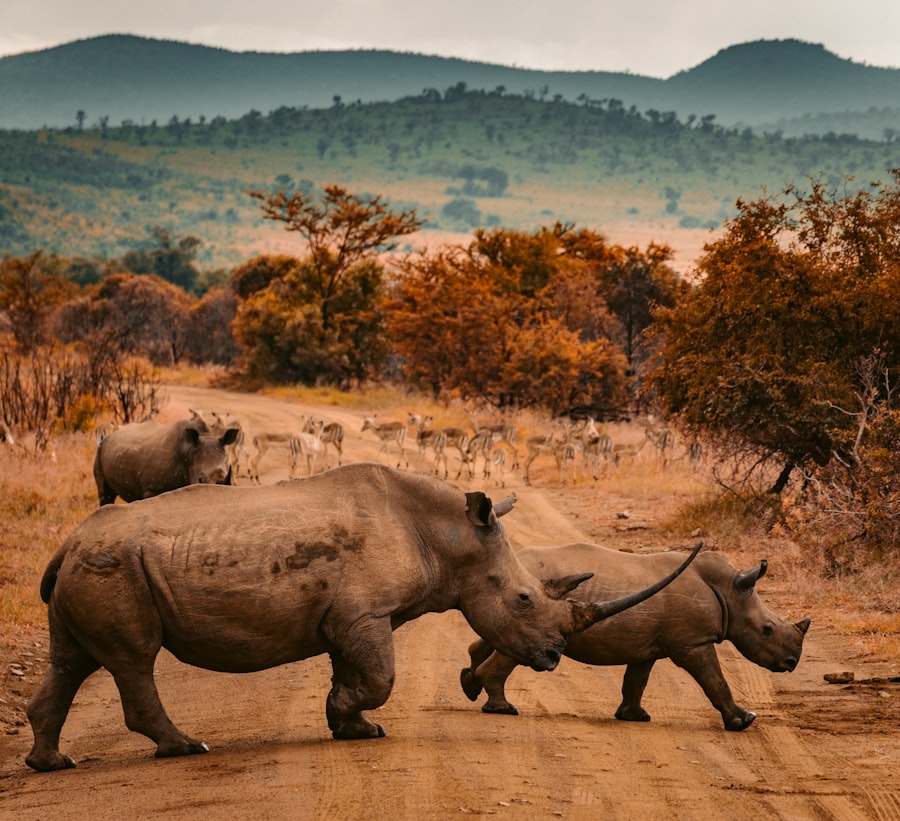 Est. 1946 · Kenya’s First National Park
This park defines Nairobi City’s global identity as a place where conservation and urban life coexist. It is not a distant wilderness attached to the city by marketing — it is a real protected landscape at the urban edge, where rhinos, lions, giraffes, and ostriches live beside roads, airports, estates, and towers.
For visitors, the park offers one of Kenya’s most accessible safaris. For Nairobi, it is much more than that. It is ecological memory. It is a conservation classroom. It is breathing space. It is a warning about urban expansion. It is a living reminder that Nairobi’s growth must negotiate with land, water, wildlife, and history.
Wildlife commonly seen includes:
Green Spaces & Nature Within Nairobi City
Nairobi’s green identity is one of its strongest and most fragile assets. The city has forests, parks, gardens, rivers, wetlands, wildlife areas, tree-lined older neighborhoods, and highland air — but that green inheritance is being tested by apartment growth, road expansion, river pollution, and encroachment.
Karura Forest
One of Africa’s largest protected urban forests — featuring waterfalls, caves, walking trails, and cycling routes. Saved from development by Nobel Laureate Wangari Maathai.
Nairobi National Park
Wild savannah at the city’s southern edge
Ngong Hills
Nairobi’s western skyline & panoramic views
Nairobi Arboretum
Living archive of indigenous & exotic trees
Uhuru & City Parks
Civic green hearts at the edge of the CBD
Nairobi’s major green-space entities:
The name Nairobi is often linked to the idea of cool waters. That makes the state of the Nairobi River system especially important. A cleaner Nairobi River would mean safer riparian zones, better drainage, improved public health, stronger urban biodiversity, more dignified public space, reduced flooding risk, and a renewed relationship between the city and its original landscape.
Geography, Climate & Natural Setting
Nairobi City lies at approximately 1,795 meters above sea level, giving it a mild highland climate despite its equatorial location. Geographically, it sits between the Great Rift Valley and the Athi Plains.
Climate Overview
Nairobi’s elevation gives it a cooler climate than many visitors expect.
- Warm days, cool mornings and evenings
- Long rains: March–May
- Short rains: October–December
- Comfortable year-round temperatures
- Always bring a light jacket for evenings
Geographic Position
Nairobi’s geography has shaped its biodiversity, water systems, and settlement patterns.
- ~1,795 metres above sea level
- Sits between the Great Rift Valley and the Athi Plains
- Equatorial position — 1° south of the equator
- EAT timezone: UTC+3
- 703.87 km² — Kenya’s County No. 047
The Skyline & Urban Character
Nairobi’s skyline has changed quickly. Its true character is not only vertical — it is layered.
- Upper Hill: banks, offices, healthcare
- Westlands: corporate, nightlife, high-rises
- CBD: historic commercial core
- Kilimani & Kileleshwa: apartments & dining
- Mombasa Road: industry & logistics corridor
Nairobi’s Population & Urban Growth
The 2019 Kenya Population and Housing Census recorded 4,397,073 people in Nairobi City, with 1,506,888 households and an area of about 703.87 km² — making Nairobi Kenya’s most densely populated county.
That density explains much of Nairobi’s daily experience: traffic, apartment construction, pressure on public services, rising land values, informal settlements, expanding rental estates, and demand for schools and hospitals.
Why is Nairobi growing so fast?
Nairobi is growing because it concentrates Kenya’s largest range of opportunities: government jobs, corporate employment, informal trade, universities, hospitals, technology firms, media houses, international organizations, transport connections, tourism services, and financial institutions.
But Nairobi’s growth has also exposed planning weaknesses. Much of the city’s colonial planning inheritance was not designed for the scale, speed, informality, car ownership, migration, and vertical development that Nairobi now carries. Nairobi is not a failed city. It is a city outgrowing old frameworks while trying to build new ones.
Growth corridors shaping Nairobi’s future:
Neighborhoods & Suburbs of Nairobi City
Nairobi City is best understood as a network of distinct neighborhoods, each reflecting different eras and lifestyles. A single Nairobi route can pass through a national park edge, a gated estate, a dense rental neighborhood, a colonial-era building, a market street, a diplomatic zone, and a forest reserve — all within minutes.
CBD
Historical and commercial core — Parliament, archives, City Market, street food, and colonial-era architecture.
Upper Hill
Corporate and healthcare hub — banks, law firms, hospitals, hotels, and government-adjacent offices.
Westlands
Nightlife, corporate offices, malls, hotels, restaurants from 40+ cuisines, and high-rises around GTC.
Kilimani
Dense residential living, cafés, apartments, coworking spaces, and a buzzing restaurant scene.
Karen
Green estates, heritage sites — Giraffe Centre, Sheldrick Trust, Karen Blixen Museum, and Talisman restaurant.
Lavington
Established residential zone — quiet roads, gardens, independent restaurants, and long-term expatriate community.
Kileleshwa
Upscale apartments, tree-lined streets, growing café culture, and proximity to Westlands and Kilimani.
Langata
Adjacent to Nairobi National Park — home to wildlife attractions, low-density housing, and the Bomas of Kenya.
Parklands
Multicultural commerce and food — a vibrant South Asian community, wholesale trade, temples, and restaurants.
Eastleigh
One of Nairobi’s most dynamic trade districts — Somali culture, wholesale fashion, informal markets, and enterprise.
Gigiri
UN Village — embassies, international schools, UNEP, UN-Habitat, diplomatic residences, and security zones.
Embakasi
Industry, aviation, and growth — JKIA corridor, Mlolongo, Syokimau, and expanding residential estates.
Nairobi as East Africa’s Commercial Hub
Nairobi is one of Africa’s most important business cities — described as the leading economic hub in East and Central Africa. Its economy is not only formal. It runs through banks and boardrooms, but also through matatus, kiosks, markets, fundis, mobile-money agents, boda riders, and small businesses.
Finance & Banking
Nairobi is Kenya’s financial decision-making center. The city concentrates banks, investment firms, insurers, fintech companies, and the Nairobi Securities Exchange.
Technology & Startups
Nairobi drives Kenya’s fintech, digital services, and innovation identity — from M-Pesa and iHub to Andela, Twiga Foods, and a generation of East African tech companies.
Media & Creative
Nairobi shapes national news, entertainment, radio, TV, publishing, digital culture, Afrobeats, film, advertising, comedy, and public conversation across Kenya and East Africa.
Trade & Markets
Eastleigh, Gikomba, Wakulima Market, City Market, Toi Market, and CBD trade corridors show the city’s regional commercial depth — billions in informal and formal trade annually.
Tourism Economy
Nairobi supports safari operators, hotels, tour guides, museums, national parks, restaurants, and airport services. Tourism is both wildlife-based and business/conference-driven.
Real Estate & Construction
Nairobi’s growth is reshaping neighborhoods through apartment towers, offices, malls, gated developments, and major infrastructure along key road corridors.
| Sector | Why It Matters for Nairobi |
|---|---|
| Finance & banking | Nairobi is Kenya’s financial decision-making center, home to all major banks, insurance companies, and investment institutions. |
| Technology & startups | Nairobi drives Kenya’s fintech, digital services, and innovation identity — the “Silicon Savannah” reputation is grounded in real output. |
| Media | Nairobi shapes national news, entertainment, radio, TV, publishing, and digital culture across Kenya and the wider East African region. |
| Trade & markets | Eastleigh, Gikomba, Wakulima, City Market, and CBD trading districts show the city’s commercial depth beyond the formal sector. |
| Tourism economy | Nairobi supports safari operators, hotels, guides, museums, parks, restaurants, and airport services — for both wildlife and business tourists. |
| Real estate | Nairobi’s growth is reshaping neighborhoods through apartment towers, offices, malls, and gated developments at speed. |
| Conferences & diplomacy | Nairobi’s hotels, UN presence, embassies, and convention spaces support major international events and attract global delegations year-round. |
Nairobi as a Transport Hub
Nairobi is Kenya’s main transport junction — connecting international aviation, domestic flights, safari aviation, regional roads, commuter routes, matatus, taxis, ride-hailing, railway services, and logistics corridors. Well-connected but not always easy to move through.
Jomo Kenyatta International Airport NBO
Nairobi’s main international airport and Kenya’s major long-haul aviation gateway. Connects Nairobi to destinations across Africa, Europe, the Middle East, and beyond.
Wilson Airport WIL
Nairobi’s domestic, charter, and safari aviation airport — IATA code WIL, ICAO code HKNW. Especially important for flights to Maasai Mara, Amboseli, Samburu, Laikipia, Lewa, Diani, Lamu, and other safari or coastal destinations.
Movement Within the City
- Ride-hailing services (Uber, Bolt, Little Cab) are the most reliable for visitors — book from your phone for any journey, day or night.
- Matatus and buses form the public transport backbone and are the most affordable option, but require local knowledge of routes.
- Walking works best within specific districts — Westlands, Karen, and parts of the CBD are walkable; longer routes are not.
- Traffic timing is critical — rush hours can double travel times across the city. Plan early mornings and avoid peak hours where possible.
- Commuter rail links the CBD to Embakasi and outer suburbs, though services are limited compared to road options.
- Private transfers are recommended for airport arrivals and safaris — agree on prices in advance or use metered/app services.
Is Nairobi easy to get around? Nairobi is well connected but not always easy to move through. The city has airports, major highways, taxis, ride-hailing, matatus, buses, commuter rail, and private transfers — but traffic congestion, road works, rush-hour pressure, and pedestrian gaps can make movement difficult for first-time visitors.
Nairobi’s Role in Tourism
Nairobi tourism has several layers. It is not only wildlife tourism. The county tourism page lists Nairobi National Park, Nairobi Safari Walk, Giraffe Centre, Sheldrick Wildlife Trust, Karura Forest, Bomas of Kenya, Nairobi National Museum, Railway Museum, and many more among major attractions.
| Tourism Type | Nairobi Examples |
|---|---|
| Wildlife tourism | Nairobi National Park, Nairobi Safari Walk, Sheldrick Wildlife Trust, Giraffe Centre |
| Cultural tourism | Bomas of Kenya, Kenya National Theatre, Maasai Market, local food tours, music and art spaces |
| Historical tourism | Railway Museum, Kenya National Archives, Nairobi Gallery, colonial and independence-era city walks |
| Nature tourism | Karura Forest, Nairobi Arboretum, City Park, Oloolua Nature Trail, Ngong Road Forest, Ngong Hills |
| Business tourism | Conferences, diplomatic meetings, hotels, KICC, UN events, corporate travel, international delegations |
| Transit tourism | JKIA layovers, Wilson Airport safari connections, short city tours for passengers in transit |
| Urban walking tourism | CBD heritage walks, market walks, Eastlands stories, green-space walks, architecture walks |
| Food tourism | Nyama choma joints, street food at Gikomba, specialty coffee, Indian, Somali, Ethiopian, and rooftop dining |
Culture, Arts & Daily Life in Nairobi City
Nairobi City is Kenya’s cultural engine. English and Swahili dominate public life, with dozens of Kenyan languages spoken daily. Faith, food, music, and markets are central to how communities define themselves and connect across the city.
Arts & Creative Expression
Nairobi’s creative scene spans visual art galleries and public murals, theatre, spoken word, and film festivals, and music scenes ranging from live bands to contemporary African genres including Afrobeats, Benga, and Gengetone.
- GoDown Arts Centre — Industrial Area
- Kuona Trust artist studios — Upperhill
- Kenya National Theatre — University Way
- Public murals across Mathare, Westlands, and beyond
Food & Culinary Culture
Food is central to Nairobi City’s identity. Food spaces double as social meeting points and cultural crossroads.
Faith, Language & Heritage
Churches, mosques, temples, and cultural centers play major roles in community life and social support systems. Nairobi’s faith landscape is as diverse as its neighborhoods.
- English and Swahili dominate public life
- Kikuyu, Luo, Luhya, Kamba, and 40+ languages spoken
- Major churches, mosques, Hindu temples, and synagogues
- Bomas of Kenya — showcasing Kenya’s 42+ communities
Nairobi as a Technology, Media & Innovation Hub
Nairobi is central to Kenya’s digital economy. Its technology identity is visible in fintech, mobile payments, startup spaces, software firms, digital media, creative industries, e-commerce, ride-hailing, online delivery, and Kenya’s wider “Silicon Savannah” reputation.
But Nairobi’s technology story is not only about startups. It is also about everyday urban life. M-Pesa payments, delivery riders, taxi apps, digital banking, eCitizen services, mobile data, online work, WhatsApp business, social media marketing, and digital ticketing shape how Nairobi residents and visitors move through the city.
Its technology ecosystem is closely tied to Kenya’s financial sector, youth population, mobile-phone culture, universities, business districts, and regional role as an East African service center.
Key technology sectors in Nairobi:
“Yes. Nairobi is Kenya’s leading technology and digital services hub, especially in fintech, mobile money, startups, media, software, e-commerce, and innovation services. Its technology ecosystem is closely tied to Kenya’s financial sector, youth population, mobile-phone culture, universities, business districts, and regional role as an East African service center.”
— NairobiKenya.Org on whether Nairobi is a technology hubEducation, Health, Business & Media
Nairobi is Kenya’s main concentration point for specialized services — where many families come for hospitals, universities, professional training, government offices, legal services, media opportunities, international schools, business registration, conferences, and technology work.
- Education: Universities, colleges, international schools, technical institutes, research centers
- Health: National referral hospitals, private hospitals, clinics, pharmacies, medical tourism
- Business: Banks, law firms, government agencies, trade centers, coworking spaces
- Media: National newspapers, television, radio, digital media, music, film, content creation
Nairobi as a City of Contrasts
Nairobi is often described as a city of contrasts because it is one. These contrasts should not be presented as spectacle. They should be understood as the reality of a fast-growing capital shaped by opportunity, inequality, planning history, land pressure, and human energy.
Nairobi is not a poor city pretending to be modern. It is a major African city carrying the strain of growth. A truthful Nairobi guide must show inequality without exploiting it — and also show the city’s intelligence, ambition, humor, enterprise, creativity, and everyday courage.
Nairobi Beyond the Poverty Lens
Nairobi has inequality. That must be said clearly. It has informal settlements, under-served neighborhoods, housing pressure, drainage problems, waste challenges, insecurity concerns, and public infrastructure gaps.
But Nairobi should not be reduced to poverty. Too many visitors are shown the city through a narrow lens of slum tourism or urban hardship. That approach can turn real communities into spectacles and flatten a complex city into one emotional image.
NairobiKenya.Org takes a different path. We believe Nairobi’s informal settlements should be discussed with dignity, history, and context. Kibera, Mathare, Mukuru, Korogocho, and other neighborhoods are not props for pity. They are living urban communities shaped by labor, migration, politics, creativity, struggle, organizing, culture, family life, and the long history of unequal planning.
A truthful Nairobi guide must show inequality without exploiting it. It must also show the city’s intelligence, ambition, humor, enterprise, creativity, and everyday courage. Nairobi has hardship, but it is also financial, technological, diplomatic, creative, ecological, entrepreneurial, youthful, and globally connected.
Safety & Practical Information
Safety in Nairobi City is location- and time-dependent. With planning, local guidance, and awareness, Nairobi is a fully navigable and rewarding city for visitors.
Safety Guidance
- Use ride-hailing (Uber, Bolt, Little Cab) at night — avoid hailing random taxis after dark.
- Avoid displaying valuables such as phones, cameras, and jewelry in crowded areas like bus stages and markets.
- Seek local advice for neighborhood-specific norms — what is safe in Karen may differ from Eastleigh or CBD.
- Plan activities by area to reduce transit risks — cluster your visits geographically where possible.
- Keep copies of important documents (passport, visa) and share your itinerary with someone you trust.
Living in Nairobi City
Living in Nairobi City involves balancing housing location, commute time, cost of living, and access to green space and services.
- Wide range of housing options across all budgets — from Westlands apartments to Karen houses to Eastlands rentals.
- Strong private healthcare sector — MP Shah, Aga Khan, Nairobi Hospital, Karen Hospital, and many specialist clinics.
- International and local schools — IB, British, American, and Kenyan curricula available across the city.
- Active café, coworking, and fitness culture — especially in Kilimani, Westlands, and Karen.
- M-Pesa is essential — most transactions, large and small, are handled through mobile money.
How We Welcome Visitors to Nairobi
Some visitors arrive in Nairobi with only a few hours before a flight. Others have a business meeting, a conference, a safari departure, a family visit, a weekend stopover, or several days to explore. Whatever brings you here, Nairobi deserves more than a rushed transfer.
Short Stopover
Short city orientation, local meal, viewpoint, museum stop, or airport-area guided route near JKIA or Wilson Airport.
Half Day
Nairobi National Park safari, Karen-area wildlife circuit (Giraffe Centre + Sheldrick), or a focused city walk.
One Day
National park at dawn, Nairobi Museum, local lunch, green-space walk, and neighborhood interpretation stop.
Weekend
City walk, Nairobi National Park, forest visit, market or food experience, and a cultural stop at Bomas or Karen.
Deep Nairobi
CBD, Eastlands, Westlands, Karen, Gigiri, forests, museums, food, nightlife, and day trips to the Rift Valley.
Explore NairobiKenya.Org
Our aim is simple: we want Nairobi to surprise you — through scale, speed, green memory, intelligence, and possibility. Not through shock. Not through staged hardship. Not through exaggerated promises.
Day Tours
Maasai Mara, Lake Nakuru, Hell’s Gate, Amboseli, Ngong Hills, Maasai Village — all reachable in a day from Nairobi. 6+ curated itineraries with prices, guides, and booking.
City Tours
Classic Nairobi, street food, arts and culture, or Nairobi by night. Tabbed itineraries covering the CBD, Karen, Westlands, Mathare, and everything in between.
Location Profiles
Deep-dive guides to Westlands, Karen, Karura, Gigiri, Eastleigh, Gikomba Market, Uhuru Park, the CBD, and Nairobi’s most compelling neighbourhoods.
About Nairobi
History, geography, climate, population, economy, green spaces, matatu culture, food, and what makes Nairobi unlike any other African city. The full city story.
FAQs About Nairobi City
What is Nairobi City best known for?
Its national park within city limits — a global rarity — alongside its multicultural food scene, regional business leadership, technology ecosystem (Silicon Savannah), UN diplomatic presence, and extraordinary creative energy.
Can you see wildlife in Nairobi City?
Yes. Nairobi National Park offers wildlife viewing within minutes of the CBD — rhinos, lions, giraffes, buffalo, zebras, leopards, hippos, crocodiles, and more than 400 bird species recorded by Kenya Wildlife Service.
Is Nairobi City safe for tourists?
Yes, with planning, local guidance, and awareness of time and location. Use ride-hailing at night, avoid displaying valuables in crowded areas, seek local advice for neighbourhood-specific norms, and plan activities by area to reduce transit risks.
How many days are enough to experience Nairobi?
Two to three days provide a solid introduction; longer stays reveal deeper layers. With a full day you can combine wildlife, history, food, and green space. Three or more days lets Nairobi’s neighbourhoods, markets, forests, and stories open up properly.
What is the best way to get around Nairobi City?
Ride-hailing combined with walking in specific areas is most effective for visitors. Matatus and buses form the public transport backbone but require local knowledge. Traffic timing is critical — rush hours can double travel times across the city.
Is Nairobi City expensive?
Costs vary widely depending on housing, transport, dining, and lifestyle choices. Nairobi has street food for KES 50 and fine dining for USD 100+ per head. There is something for every budget — the city serves diplomats, investors, workers, and visitors at very different income levels.
Welcome to NairobiKenya.Org
Nairobi is not a city to pass through carelessly. It is Kenya’s capital, Nairobi City County, East Africa’s commercial hub, a diplomatic city, a technology and media center, a transport junction, a safari gateway, a green city under pressure, and a home to millions of people making life in motion.
A city of ambition and strain. A city of shade and dust. A city of memory and construction. A city of wildlife and traffic. A city that deserves better walking routes, cleaner rivers, stronger public spaces, protected forests, wiser planning, and deeper respect.
Welcome to Nairobi — the Green City in the Sun, still becoming.
Nairobi Postal Codes and Addresses
Nairobi Kenya / Knowing the City / Nairobi postal codes Knowing the City / Practical…
How to Plan Your Nairobi Visit
NairobiKenya.org · Visitor Planning Guide How to Plan Your Nairobi Visit Nairobi is not just…
Nairobi on a Budget: The Complete Affordable Travel Guide
Nairobi can be explored on a budget of approximately KSh 4,000–7,000 per person per day…
Best Rooftop Bars in Nairobi: Where to Drink Above the City
The best rooftop bars in Nairobi combine three things: a clear view, a distinctive atmosphere…
Free Things to Do in Nairobi, Kenya
The best free things to do in Nairobi include walking through Uhuru Park and Central…
Parking in Nairobi: Fees, Locations, Payment and Rules
Parking is available throughout Nairobi, but the right option depends on where you are going,…
See Nairobi from the KICC landmark that has defined its skyline since 1973
Private Nairobi landmark experience · Up to 3 hours See Nairobi from the landmark that…
What Is a Nairobi CBD Walking Tour Really Like?
One moment you are standing beneath Nairobi’s office towers, watching people hurry between banks, government…
Best Things to Do in Nairobi, Kenya
The best things to do in Nairobi are an early-morning safari in Nairobi National Park,…
Kenya County Numbers 1–47: Complete List and Codes
Kenya County Numbers 1–47: Complete List and Codes Kenya has 47 counties, numbered from 1…
Nairobi Travel Guide: Plan Your Trip
Home / Travel Guide Nairobi Travel Guide Nairobi Travel Guide: Plan Your Trip Everything you…
Top attractions & places to visit in Nairobi
Nairobi Attractions: Top Places to Visit | NairobiKenya.org Nairobi, Kenya // attractions Top attractions &…
Sarit Centre Nairobi: Complete Guide to Shopping, Dining, Cinema and Events in Westlands
Sarit Centre Nairobi at a Glance Sarit Centre is one of Nairobi’s landmark shopping malls,…
Village Market Nairobi: Complete Guide to Shopping, Dining and Entertainment in Gigiri
Village Market Nairobi at a Glance Village Market is one of Nairobi’s best-known shopping, dining…
Two Rivers Mall Nairobi
Two Rivers Mall Nairobi at a Glance Two Rivers Mall is one of Nairobi’s largest…
Nairobi Maasai Market & Kenyan Crafts Shopping Tour
Private Guided Souvenir, Beadwork, Textile & Gift-Buying Experience Shop Nairobi with a plan. This private…
Nairobi Museums, Art & Railway Heritage Tour
Discover the stories that made Nairobi in this Private Nairobi National Museum, Railway Museum &…
Nairobi Food, Market & Kenyan Cooking Tour
Private Market Visit, Hands-On Cooking Class & Local Meal Taste Nairobi beyond restaurant menus with…
Nairobi City Walking Tour
Private CBD History, Markets, Street Life & KICC Experience Walk Nairobi properly with NairobiKenya.org local…
Karura Forest Nature & Waterfall Tour
Private Nairobi Forest Walk with Optional Cycling Upgrade Escape Nairobi without leaving Nairobi. This private…
Bomas of Kenya Cultural Dance Show Tour
Private Nairobi Afternoon Tour with Traditional Villages, Music & Dance Experience Kenya’s cultural diversity in…
Kimathi Street Nairobi: The Complete Guide
The street that runs from Kenya’s oldest luxury hotel to its greatest freedom fighter’s bronze…
Fairview Coffee Estate Tour from Nairobi
Private Coffee Farm Visit, Guided Tasting & Hotel Pickup Step beyond Nairobi’s city streets and…
Private Nairobi City Safari by Car
A Panoramic Nairobi Sightseeing Tour with Hotel, Residence or Airport Pickup See Nairobi in motion….
Mama Ngina Street Nairobi: The Complete Guide
The street that carried a Queen’s name, gave it up for a First Lady’s —…
Nairobi Airport Layover Tour from JKIA
Private Nairobi City, Giraffe Centre or Safari Experience with Airport Pickup & Return Turn a…
Kenyatta Avenue Nairobi: The Complete Guide
Nairobi’s widest boulevard — and the street that carries more than a century of colonial…
Moi Avenue, Nairobi: The Complete Guide
The street that built a city — and witnessed its most defining moments. What Is…
How to Spend 48 Hours in Nairobi: The Complete Guide
Before You Arrive: Essential Context Nairobi sits at 1,795 metres (5,889 feet) above sea level,…
The Meaning of Nairobi: A Comprehensive Guide
1. The Root Word: Linguistic Origins in the Maa Language The name “Nairobi” is not…