
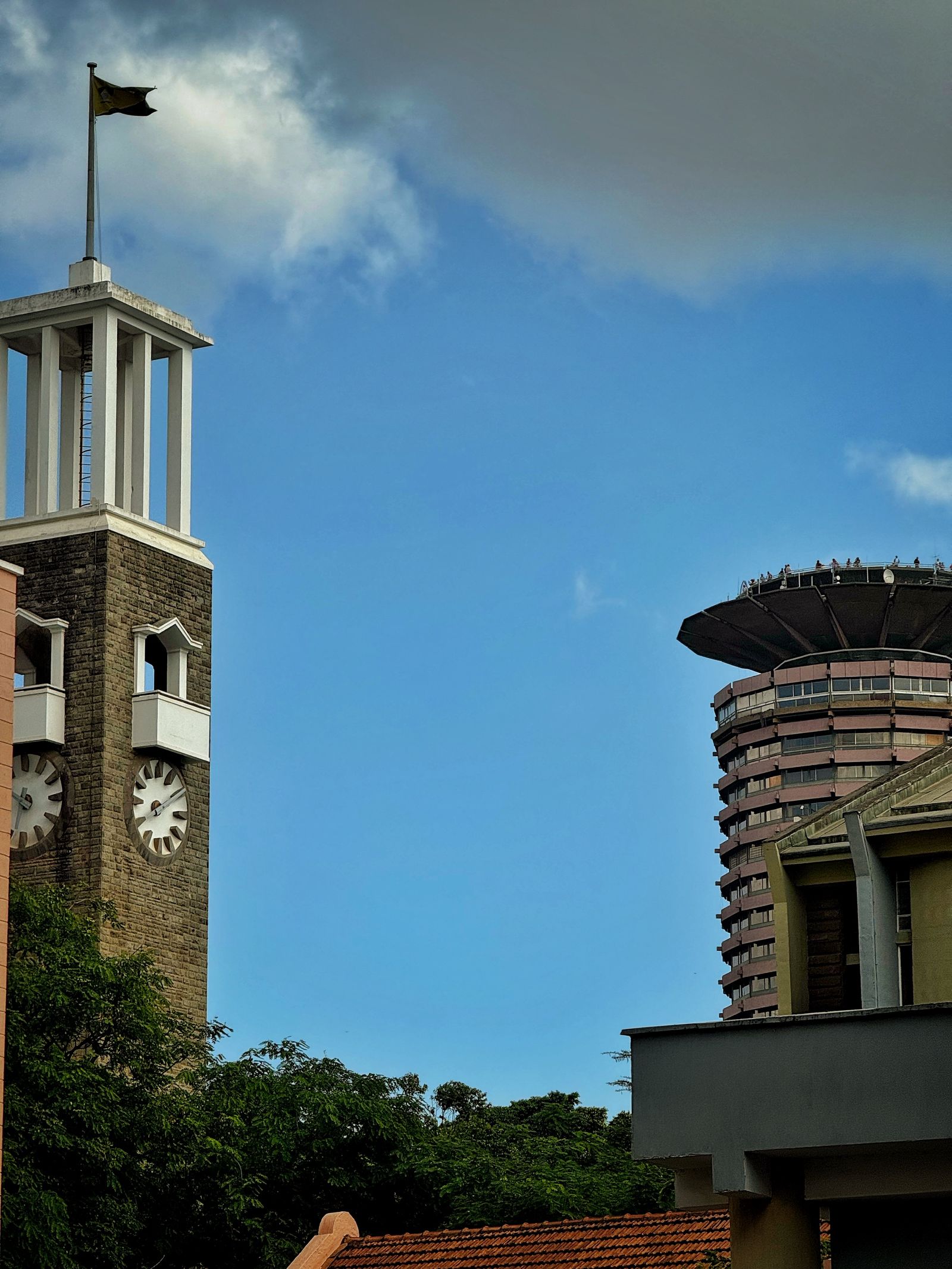
One moment you are standing beneath Nairobi’s office towers, watching people hurry between banks, government buildings and matatu stages. A few minutes later, you may be beside an old stone façade while your guide explains how a railway camp became Kenya’s capital.
That contrast is what makes a Nairobi CBD walking tour interesting. Central Nairobi is not a preserved historic quarter arranged neatly for visitors. It is a working city centre—busy, layered, occasionally untidy and constantly moving.
Walking lets you experience that movement rather than watching it through a vehicle window. You hear the traffic before you cross the road, notice details above shopfronts, pause where political history unfolded and see how markets, places of worship, public institutions and everyday commerce occupy the same compact part of the city.
A typical private walk lasts about three and a half to four hours and covers roughly three to five kilometres. The route normally begins around KICC or City Hall before connecting historic streets, civic landmarks, City Market, Jamia Mosque, McMillan Memorial Library, Jeevanjee Gardens and other public spaces. The precise sequence can change with weather, access restrictions, road diversions and what your group is most interested in seeing.
What does a Nairobi CBD walking tour feel like?
The first thing you notice is the pace.
Nairobi’s CBD does not slowly wake up for visitors. By the time most morning walks begin, commuters are already pouring into the centre, shop shutters are lifting, delivery vehicles are competing for space and office workers are moving with the purposeful expression of people who know exactly where they are going.
You are not standing outside Nairobi observing it. You are inside its rhythm.
That can feel slightly overwhelming during the first few minutes. There is traffic to read, people moving in several directions and more visual information than you can absorb at once. Then the guide begins connecting the pieces. A formal government building becomes part of Kenya’s political history. A matatu stage explains how the city moves. A street name leads into the story of independence. A public garden reveals how residents use space in one of the busiest parts of the capital.
This context is the real value of the walk. You could photograph KICC alone or pass McMillan Library without assistance. What is much harder is understanding why those places are there, what changed around them and how they relate to the larger story of the Nairobi Central Business District.

Where does the walking tour begin?
Most private Nairobi CBD walks begin near the Kenyatta International Convention Centre, City Hall or another agreed meeting point in the civic centre.
KICC is a useful place to start because it is easy to recognise and sits close to several of the institutions that define central Nairobi. From the surrounding area, your guide can point out government offices, public squares, older civic buildings and the commercial towers that now dominate the skyline.
This opening is less about standing still for a long history lecture and more about learning how to read the city. The guide gives you a mental map, explains the likely route and checks whether your interest leans more toward architecture, politics, photography, shopping, transport or everyday urban life.
Because the experience is private, the route can breathe. You do not have to hurry away from a building just because a large group itinerary says it is time to leave.
The KICC and civic-centre experience
Standing around KICC, you meet a version of Nairobi that surprises visitors who know the city mainly as the place where a safari begins.
Conference delegates may be entering the complex while security officers watch nearby buildings. Taxis wait at the edge of the road. Office workers cross between government departments. A street trader may be selling snacks only a short walk from some of the country’s most important institutions.
That contrast matters. For a few hours, Nairobi stops being the transfer point between JKIA and the national parks. The city becomes the destination.
Your guide may explain how the railway shaped the original settlement, how the administrative centre expanded and how architecture changed before and after independence. Some buildings are monumental and deliberately formal. Others have been adapted so many times that old Nairobi survives only in their upper floors, stonework or proportions.
Walking makes those details visible. You begin to look above modern shop signs, down side streets and across public squares rather than seeing only the building directly in front of you.
Can you visit the KICC rooftop?
The KICC rooftop or helipad can sometimes be added, but it should be treated as an optional, access-dependent experience rather than a guaranteed part of every walking tour.
KICC remains a functioning convention venue. Major meetings, security arrangements or operational decisions can affect public access. When the viewpoint is available, however, it gives you the clearest possible introduction to central Nairobi.
At street level, the CBD can feel dense and slightly disorientating. From above, the avenues, civic buildings and high-rises begin to fit together. It is also an excellent photography stop when the weather is clear—although Nairobi has no obligation to provide a perfect horizon simply because you brought a camera.
Walking through Nairobi’s historic streets
The named landmarks matter, but much of the experience happens between them.
You may stop beside an older building while shoppers stream behind you, cross a road filled with buses and delivery vehicles or step aside as workers emerge from an office entrance. Your guide may suddenly point upward to a façade detail that almost everyone else on the pavement is too busy to notice.
These transitions show Nairobi as a city that has repeatedly rebuilt and repurposed itself. Colonial-era structures remain, but they now sit among Kenyan-owned businesses, government institutions, places of worship, banks, cafés, informal traders and transport routes used by thousands of residents every day.
For a broader explanation of how these routes connect, see the guide to Nairobi’s streets, roads and avenues. Several individual streets also deserve closer attention:
- Kenyatta Avenue combines ceremonial space, mature trees, civic architecture and some of Nairobi’s most recognisable buildings.
- Kimathi Street blends heritage, restaurants, retail activity and the public memory of the independence struggle.
- Mama Ngina Street reveals another layer of the commercial and administrative centre.
- Moi Avenue carries the energy of a major commercial and public-transport corridor.
You will not necessarily walk the full length of each one. The point is to understand how different streets have developed distinct personalities despite sitting only a few blocks apart.
What is City Market like?
City Market usually changes the mood of the walk.
The space becomes more enclosed, colourful and conversational. Traders invite you to look at carvings, textiles, jewellery, beadwork, bags and other gifts. Shopping becomes a social exchange rather than a silent walk past shelves.
Having a guide helps here. They can explain what you are looking at, distinguish different types of products and give practical advice on bargaining without turning the visit into a pressured shopping stop.
Expect traders to greet you and invite you into their stalls. You are free to browse, ask questions, negotiate politely or decline. A relaxed “no, thank you” is usually enough. There is no need to treat every conversation as a contest.
City Market is not the same experience as Nairobi’s rotating open-air Maasai markets. Travellers specifically interested in crafts, textiles and longer shopping time can compare it with the Nairobi Maasai Market and Kenyan crafts tour or check the current Maasai market locations and weekly schedule. The broader guide to shopping in Nairobi is also useful when you want malls, boutiques and markets beyond the CBD.

Jamia Mosque and Nairobi’s religious life
Near the market district, the architecture of Jamia Mosque creates another change in the streetscape.
The mosque is not simply a handsome building to photograph. It is an active place of worship and part of the everyday religious life of central Nairobi. Worshippers arrive and leave according to prayer schedules while shops, offices and street commerce continue around them.
Most walking tours interpret the mosque respectfully from outside. Interior entry cannot be assumed because access depends on prayer times, dress, security and venue rules.
This stop is a useful reminder that a city walk should not treat every building as something to enter. Some places are best understood from a public area, with the guide explaining their role in Nairobi’s multicultural history.
McMillan Memorial Library: a beautiful building with a complicated story
McMillan Memorial Library is one of those buildings that makes you slow down before you know anything about it.
The stone entrance, columns and lion sculptures feel unexpectedly formal beside the movement of Banda Street. Then the guide begins explaining who the library was originally created for, who was excluded and how its public role changed as Nairobi moved toward independence.
That is when the stop becomes more than an architecture photograph.
The building provides a way to discuss colonial planning, education, access to public institutions and the continuing effort to preserve Nairobi’s cultural heritage. Interior access is not always part of the route, but the exterior alone gives the guide plenty to work with.
Travellers who want more time with the city’s museums, archives and heritage buildings may prefer to add or separately book the Nairobi museums, art and railway heritage tour.
Jeevanjee Gardens: a pause rather than another attraction
After busy pavements and market conversations, Jeevanjee Gardens gives the walk room to breathe.
People sit during work breaks, wait for friends, read, talk or simply step away from the surrounding roads. The city has not disappeared, but it no longer feels quite so close.
This is often where the walking tour becomes more conversational. You can ask the guide about Nairobi’s communities, public transport, work, food, neighbourhoods or how the city has changed. Not every useful moment needs to happen in front of a monument.
A good walking tour leaves space for Nairobi to happen around you.
Street commerce and everyday Nairobi
Some of the most memorable details are not official attractions at all.
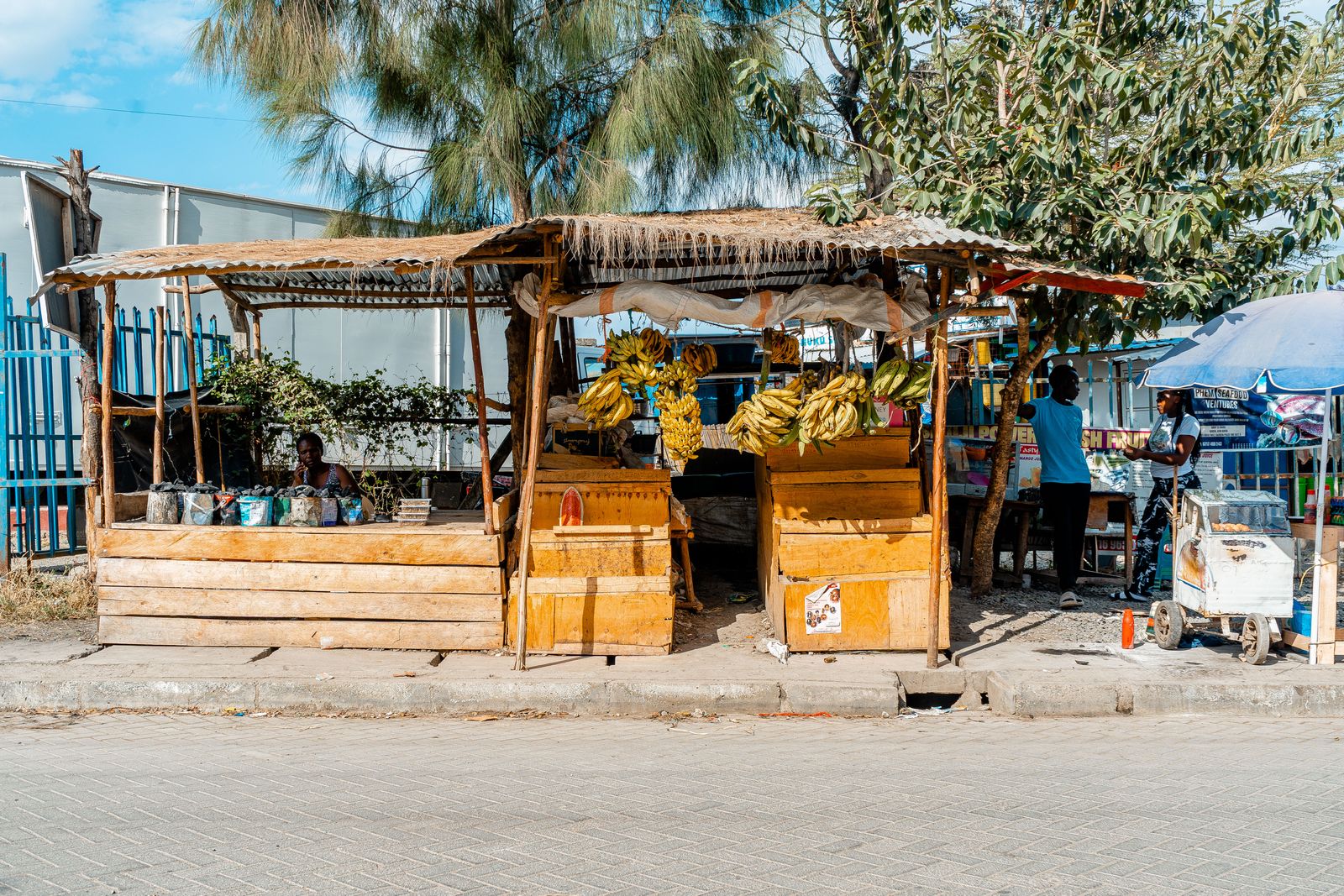
It might be a shoe shiner working beside an office block, a newspaper stand crowded with headlines, a mobile-money sign squeezed between older businesses or a vendor moving through the street with far more stock than seems physically possible.
You will also notice matatus: colourful, noisy and essential to how Nairobi moves. A local guide can explain routes, stages and the relationship between transport corridors and the commercial streets around them. The general Nairobi transport guide provides useful background before or after the tour.
The important thing is to remain respectful. Nairobi residents are going to work, shopping, worshipping and conducting their normal day. They are not performers placed in the street for visitors.
Ask before taking close photographs of individuals. A wide city scene may be irresistible, but the people within it are not scenery.
Can the walk include food, coffee or museums?
Yes, but it works best when additions support the route rather than turning the morning into a race.
A coffee, tea, mandazi or light snack stop can give you a welcome break and make the experience feel more like an ordinary Nairobi morning. Travellers whose main interest is food should consider the more specialised Nairobi food, market and Kenyan cooking tour.
Museum additions may include Nairobi Gallery or another accessible heritage site, depending on opening arrangements and the time available. Each indoor visit adds depth, but it also reduces the distance you can cover on foot.
There is no prize for collecting the largest number of Nairobi attractions before lunch.
How much walking is involved?
Allow approximately three and a half to four hours and expect to cover about three to five kilometres, depending on your pace, route and optional stops.
The distance sounds manageable—and for most reasonably active visitors it is—but this is a real city walk rather than a smooth park promenade. Expect road crossings, sections of uneven pavement, market areas, occasional steps and periods of standing while the guide explains a site.
The good news is that the walk is naturally broken into short sections. You are unlikely to march for hours without pausing. Much of the time is spent looking, listening, browsing, photographing and asking questions.
Comfortable shoes still matter. This is not the ideal morning to discover that your new footwear looks much better than it feels.
What is the best time for a Nairobi CBD walk?
Morning is usually the easiest choice.
A start around 9:00 a.m. lets you see the city fully active before the strongest midday heat. Markets and businesses are open, public spaces are busy and you still have time for lunch or another activity later.
Late-morning and early-afternoon walks can also work, but consider rain, heat and evening traffic. The guide to the best time to visit Nairobi explains the city’s seasonal weather patterns in more detail.
The CBD is best explored during active daytime hours. It is not an experience to turn into an unguided night walk simply because your afternoon became busy.
Is a guided Nairobi CBD walking tour safe?
A private daytime walk along established central routes can be an enjoyable way to experience Nairobi, but it requires the normal awareness expected in any busy city centre.
- Keep your phone or camera secure when you are not using it.
- Carry only the cash and cards you expect to need.
- Use a bag that closes properly rather than an open tote.
- Stay with your guide at crossings and in crowded sections.
- Ask before taking close photographs of people.
- Do not photograph police, military personnel, security posts or sensitive government entrances.
- Arrange a verified ride or hotel transfer after the tour rather than wandering into unfamiliar streets after dark.
These precautions should not make the walk feel frightening. They are simply part of moving intelligently through a crowded capital. One of the benefits of a private guide is that somebody else is reading the route while you look at the city.
What should you wear and carry?
Dress for comfort rather than safari theatre. You do not need boots, head-to-toe khaki or an expedition hat to explore Nairobi CBD.
- Comfortable closed walking shoes.
- Lightweight clothing suited to the day’s weather.
- A compact umbrella or light rain jacket.
- Sunscreen and sunglasses.
- A small secure bag.
- Drinking water.
- A phone or camera that can be stored securely.
- Modest cash, a card or M-Pesa access for optional refreshments and shopping.
Leave large luggage and unnecessary valuables at your hotel. City Market is much easier to enjoy when you are not trying to pull a suitcase through it.
What does the guide actually add?
A good city guide does far more than point at buildings.
They choose practical crossings, adjust the route around current conditions, explain when photography may be inappropriate and control the pace so the experience remains comfortable. More importantly, they connect individual places into a coherent story.
Without context, you may remember KICC, a market and an old library.
With context, you begin to understand why Nairobi developed where it did, how colonial planning shaped the original centre, why public institutions mattered, how commercial streets evolved and how transport, faith, government and informal trade share limited urban space.
The guide also makes the experience responsive. You can ask about matatus, architecture, local food, neighbourhoods, politics, work, history or what daily life in Nairobi is actually like. The route can follow your curiosity instead of forcing every visitor through the same rehearsed speech.
Is the walk suitable for children?
The experience can work well for families, particularly those travelling with older children and teenagers.
Children may enjoy the movement of the city, the market, matatus, rooftop views and short stories behind monuments more than a long sequence of indoor displays. The main consideration is stamina rather than age alone.
Younger children may need a shortened route, more frequent breaks, fewer detailed explanations and a vehicle transfer to or from the CBD. Share their ages and walking ability before the day so the route can be planned honestly.
What about travellers with limited mobility?
Nairobi CBD includes uneven pavement sections, steps, busy crossings and crowded pedestrian areas. Guests using wheelchairs, walking aids or strollers should discuss their needs before confirming the standard route.
The walk can sometimes be shortened or adapted, but there are situations where a vehicle-based city experience will be more comfortable and useful. The private Nairobi city tour by car is the better choice when you want wider coverage, hotel pickup and less continuous walking.
Nairobi walking tour or private city drive?
Both experiences introduce the city, but they do it differently.
Choose the CBD walking tour when you want:
- Street-level atmosphere and small architectural details.
- Markets, public gardens and historic streets.
- A more active and conversational experience.
- Time to understand a compact area properly.
- A lower-cost private introduction to central Nairobi.
Choose a private city drive when you want:
- Less walking and easier mobility.
- Hotel pickup outside the CBD.
- Wider coverage across several neighbourhoods.
- Museums and attractions spread beyond the centre.
- More shelter from rain or strong midday sun.
A vehicle helps you cover more ground. Walking helps you notice more within a smaller area. That is the trade-off.
Is the walking tour suitable for a JKIA layover?
Only when the layover is genuinely long and leaves a generous buffer for immigration, transfers, security and the return to the airport.
The CBD is not beside the terminals, and Nairobi traffic can turn an apparently generous schedule into an anxious one. Travellers connecting through the airport should use the dedicated Nairobi airport layover tour from JKIA to assess what is realistic.
Do not squeeze a four-hour city walk into a narrow connection simply because the flight times look workable on paper.
How can you combine the walk with a Nairobi itinerary?
The CBD walking tour works especially well on a first morning in Nairobi because it gives you orientation before you explore independently.
It can also complement a wildlife day, museum visit or neighbourhood experience without repeating them. For practical combinations, see:
- How to spend 48 hours in Nairobi.
- A three-day Nairobi city itinerary.
- The complete guide to things to do in Nairobi.
- What to see on a Nairobi city tour.
Avoid trying to combine the walking tour, several museums, Nairobi National Park, the Giraffe Centre and an evening activity in one day. Nairobi rewards curiosity, but it does not reward unrealistic scheduling.
Who will enjoy the experience most?
A private Nairobi CBD walking tour is particularly well suited to:
- First-time visitors who want the city to make sense.
- Solo travellers who prefer exploring with local support.
- Couples, friends and small private groups.
- Business travellers with one free morning or afternoon.
- Visitors interested in architecture, politics and urban history.
- Photographers drawn to street scenes and city details.
- Travellers who have already completed a wildlife safari.
- Guests looking for a relatively accessible private Nairobi experience.
It is less suitable for travellers who dislike crowds, cannot walk comfortably for several hours or expect a polished sightseeing district separated from everyday city life.
Nairobi CBD is active, noisy and sometimes unpredictable. That is not a flaw in the walking tour. It is the experience.
Is a Nairobi CBD walking tour worth it?
Yes—particularly when you want to understand Nairobi rather than simply pass through it.
The walk will not show you every part of the capital. It does something more useful: it takes a compact area and reveals the layers within it.
You see the monumental Nairobi of convention centres, government offices and public statues. Then the commercial Nairobi of markets, matatus, shops and office workers. Beneath both sits the older city shaped by the railway, colonial administration, racial exclusion, independence and rapid urban growth.
By the end, KICC is no longer just the cylindrical tower in skyline photographs. McMillan is not merely an attractive old library. City Market is more than a place to buy souvenirs.
The places begin to connect.
And Nairobi makes more sense when you walk it.
Book a private Nairobi CBD walking tour
Walk through central Nairobi with a private local guide on a flexible three-and-a-half to four-hour route covering historic streets, architecture, markets, public spaces and everyday city life.
View Nairobi City Walking Tour prices, inclusions and availability on NairobiKenya.org.