
Experiencing Kenya’s Living Cultures in One Place
The Bomas of Kenya is one of Nairobi’s most important cultural attractions and a key recommended destination by NairobiKenya.org. Located just outside the city center in a green, open setting, Bomas of Kenya offers visitors an immersive introduction to Kenya’s diverse cultures, traditions, architecture, and performing arts—all brought together in one carefully curated space.
For travelers who want to understand Kenya beyond wildlife and landscapes, Bomas of Kenya provides something essential: context, continuity, and living heritage.
What Is Bomas of Kenya?
Bomas of Kenya is a cultural center and heritage village established in 1971 to preserve, promote, and showcase the traditional cultures of Kenya’s many ethnic communities.
The word boma refers to a traditional homestead. At Bomas of Kenya, visitors encounter:
- Reconstructed traditional villages (bomas)
- Live music and dance performances
- Cultural interpretation and education
The center is managed by the Kenyan government and functions as both a cultural attraction and a national heritage institution.
Location & Setting
Bomas of Kenya is located in Lang’ata, southwest of Nairobi, close to:
- Nairobi National Park
- Major southern Nairobi attractions
- Green, open landscapes
The location reflects its purpose: space to recreate rural architectural forms and communal settings within reach of the city.
Why Bomas of Kenya Matters
Kenya is home to more than 40 ethnic communities, each with its own:
- Language and oral traditions
- Architecture and settlement patterns
- Music, dance, and ceremony
- Social and economic systems
Bomas of Kenya exists to ensure these traditions are documented, practiced, and shared, rather than lost to rapid urbanization and globalization.
Traditional Homesteads (Bomas)


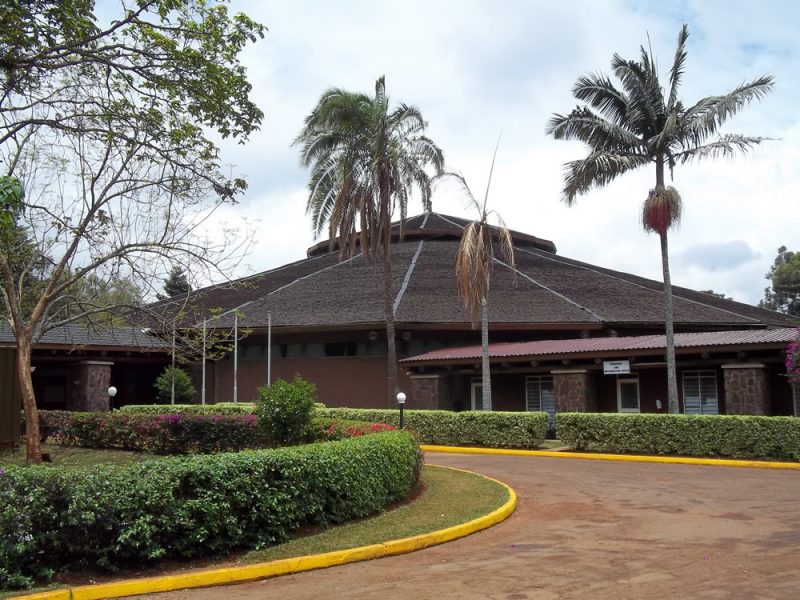
One of the core experiences at Bomas of Kenya is walking through reconstructed traditional villages representing different Kenyan communities.
What You’ll See
- Circular and rectangular homesteads
- Thatch, mud, and wood construction techniques
- Layouts reflecting family structure, livestock use, and climate
Each boma reflects how environment, economy, and culture shaped daily life across Kenya’s regions.
Cultural Performances & Traditional Dance
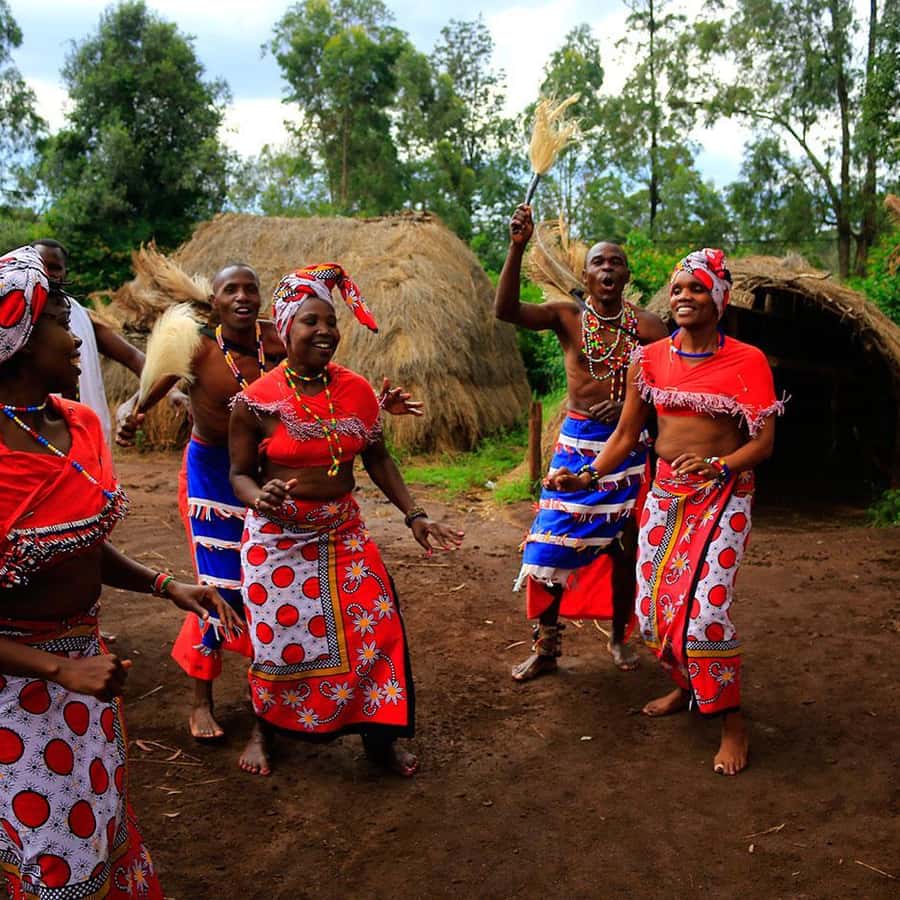


The cultural performances are the highlight for many visitors.
The Main Auditorium
Bomas of Kenya hosts daily performances in a large auditorium designed to resemble a traditional gathering space.
Performances include:
- Traditional dances from across Kenya
- Live drumming and singing
- Ceremonial and celebratory movements
These are not theatrical abstractions—they are rooted in real social functions such as:
- Rites of passage
- Harvest celebrations
- Courtship and storytelling
Music, Dance & Meaning
Each performance is accompanied by explanation, helping visitors understand:
- Why dances are performed
- What rhythms and movements signify
- How music reflects social structure
This interpretation turns performance into cultural education, not just entertainment.
Architecture & Cultural Geography
Bomas of Kenya helps visitors understand how:
- Climate influences housing design
- Livelihoods shape settlement layout
- Social systems determine space use
This makes the site especially valuable for visitors interested in:
- Anthropology
- Architecture
- History
- Education
How Long to Spend at Bomas of Kenya
A typical visit lasts:
- 2 to 3 hours
This allows time to:
- Walk through homesteads
- Attend a cultural performance
- Explore at a relaxed pace
Bomas of Kenya works well as a half-day cultural experience.
Best Time to Visit
- Visit during performance hours to get full value
- Late morning to early afternoon is ideal
- Weekdays are generally quieter than weekends
The site is open year-round.
Who Should Visit Bomas of Kenya?
First-Time Visitors to Kenya
Provides an overview of Kenya’s cultural diversity in one place.
Families & School Groups
Educational, engaging, and interactive.
Culture & History Enthusiasts
Offers insights not found in museums alone.
Visitors with Limited Travel Time
Ideal if you cannot travel across Kenya to experience different cultures firsthand.
Bomas of Kenya Compared to Other Nairobi Attractions
| Attraction | Focus |
|---|---|
| Bomas of Kenya | Living cultures & performance |
| Nairobi National Museum | Historical and scientific context |
| Karen Blixen Museum | Colonial-era narrative |
| Nairobi Railway Museum | City origins |
Bomas of Kenya focuses on people and traditions, complementing Nairobi’s other heritage sites.
Practical Visitor Tips
Visitors should:
- Plan around performance times
- Wear comfortable walking shoes
- Take time to read interpretive signage
- Ask guides questions—context enhances the experience
Photography is generally allowed; be respectful during performances.
Why NairobiKenya.org Recommends Bomas of Kenya
Bomas of Kenya strongly aligns with NairobiKenya.org’s mission to:
- Help visitors understand Kenya beyond surface-level travel
- Celebrate living culture, not just history
- Connect Nairobi to the wider country it represents
- Encourage respectful, informed tourism
It shows that Nairobi is not only Kenya’s capital—it is a meeting point of the nation’s cultures.
Common Visitor Questions (FAQs)
Is Bomas of Kenya worth visiting?
Yes, especially for visitors interested in culture and heritage.
Do I need a guide?
Not required, but guides add valuable explanation.
Is it suitable for children?
Yes, particularly for school-age children.
How long does a visit take?
About 2–3 hours.
Can I combine it with other attractions?
Yes, especially with southern Nairobi sites.
Final Thoughts: Why Bomas of Kenya Is Essential
Bomas of Kenya offers something rare in modern travel: a chance to see culture performed, explained, and contextualized, rather than displayed behind glass. It connects visitors to the rhythms, movements, and spaces that have shaped Kenyan life for generations.
For anyone visiting Nairobi who wants to understand the people behind the landscapes, Bomas of Kenya is not optional—it is fundamental.