
The Definitive Guide to Understanding Kenya, Its People, Nature, and History
Nairobi National Museum is the most important cultural and educational institution in Nairobi and one of the top recommended destinations by NairobiKenya.org. More than a museum, it is the place where visitors can understand Kenya as a whole—its landscapes, wildlife, cultures, and long human history—before or after exploring the city itself.
For travelers who want context rather than just attractions, the Nairobi National Museum is essential. It explains why Nairobi exists, how Kenya was formed, and how people, nature, and history connect.
What Is the Nairobi National Museum?
The Nairobi National Museum is Kenya’s flagship museum, managed by the National Museums of Kenya. It serves as:
- A national repository of heritage
- A research and education center
- A public space for learning and reflection
The museum brings together natural history, human evolution, cultural identity, and contemporary art under one roof.
Location & Setting
The museum is located just north of Nairobi’s city center, close to major neighborhoods and easily accessible by road.
What makes the setting special:
- Landscaped gardens surrounding the museum
- A calm, green environment despite its central location
- Proximity to other cultural and civic institutions
For visitors, it is a quiet and intellectually rich break from the pace of the city.
Why Nairobi National Museum Matters
Unlike many museums that focus narrowly on art or artifacts, Nairobi National Museum tells a holistic story of Kenya:
- From prehistoric times to the present
- From geology and wildlife to language and identity
- From rural traditions to urban modernity
It is one of the best places in Nairobi to gain orientation and context, especially for first-time visitors.
Main Galleries & Exhibitions


4
Human Origins & Prehistory
Kenya is central to the global story of human evolution, and the museum presents this clearly.
Visitors learn about:
- Fossil discoveries from across Kenya
- Early hominins and prehistoric tools
- Why East Africa is considered the cradle of humankind
This gallery connects Nairobi to deep human history stretching back millions of years.
Natural History & Biodiversity
This section explores Kenya’s extraordinary ecological diversity.
Highlights include:
- Taxidermy displays of mammals and birds
- Ecosystem explanations (savannah, forest, desert, wetlands)
- Conservation challenges and successes
It provides essential background for visitors planning safaris or nature excursions.
Cultures of Kenya
One of the museum’s most engaging sections focuses on Kenya’s many communities.
Visitors discover:
- Traditional clothing and adornment
- Music, tools, and household items
- Social structures and belief systems
This gallery helps visitors understand Kenya’s cultural diversity beyond stereotypes.
History of Kenya & Colonial Nairobi
This section places Nairobi and Kenya in historical context:
- Pre-colonial societies
- Colonial rule and urban planning
- Independence and nation-building
It complements walking tours and historical explorations of Nairobi City.
Contemporary Art & Temporary Exhibitions
The museum also supports modern Kenyan creativity through:
- Rotating art exhibitions
- Photography and mixed-media installations
- Cultural dialogues and public programs
This reinforces Nairobi’s role as a living, evolving cultural capital.
The Snake Park & Living Exhibits


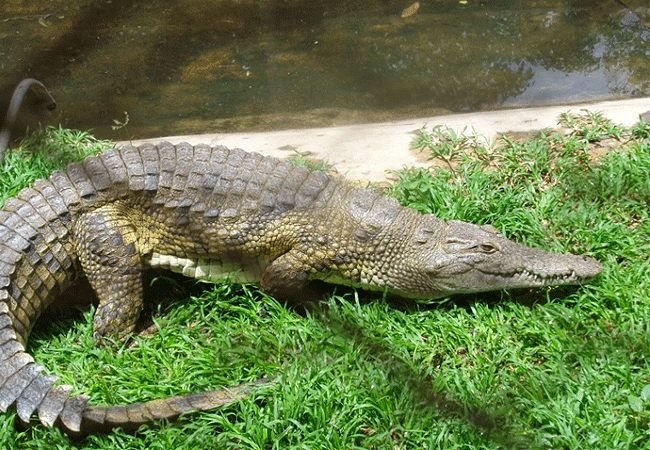
Located within the museum grounds is the Snake Park, a popular addition for families.
What it offers:
- Live reptiles including snakes, crocodiles, and turtles
- Educational displays on venom, behavior, and ecology
- A safe and well-managed environment
It adds an interactive, child-friendly dimension to the visit.
Gardens & Outdoor Spaces
The museum’s landscaped grounds are part of the experience.
Visitors can:
- Walk between exhibits outdoors
- Rest in shaded garden areas
- Enjoy sculptures and installations
These spaces make the museum suitable for longer, relaxed visits.
How Long to Spend at Nairobi National Museum
Most visitors spend:
- 1.5 to 3 hours for a general visit
- Longer if engaging deeply with exhibits or attending events
It can be:
- A half-day cultural experience
- A key stop in a Nairobi city itinerary
Best Time to Visit
- Morning or early afternoon for quieter galleries
- Weekdays for fewer crowds
- Year-round, regardless of weather
The museum is an excellent rainy-day or rest-day activity.
Who Should Visit the Nairobi National Museum?
First-Time Visitors to Nairobi
Ideal for orientation and cultural grounding.
Families
Educational, engaging, and varied.
Students & Researchers
A gateway to Kenya’s academic and scientific heritage.
Culture & History Enthusiasts
One of East Africa’s most comprehensive museums.
Nairobi National Museum Compared to Other Attractions
Visitors often ask how it fits alongside other Nairobi highlights.
| Attraction | What It Offers |
|---|---|
| Nairobi National Museum | Cultural & historical context |
| Nairobi National Park | Wildlife safari experience |
| Karura Forest | Nature and recreation |
| Giraffe Centre | Close-up conservation encounter |
The museum provides the intellectual foundation that enhances all other experiences.
Practical Visitor Information
Visitors should:
- Wear comfortable walking shoes
- Allow time to read displays
- Bring curiosity rather than rushing through
- Combine the visit with nearby attractions if desired
Photography rules vary by gallery; follow posted guidelines.
Why NairobiKenya.org Recommends Nairobi National Museum
The Nairobi National Museum aligns perfectly with NairobiKenya.org’s mission:
- Encouraging deeper understanding, not surface tourism
- Celebrating Nairobi’s role in Kenya’s story
- Connecting culture, nature, and history
It helps visitors move from seeing Nairobi to understanding it.
Common Visitor Questions (FAQs)
Is Nairobi National Museum worth visiting?
Yes. It is the best place to understand Kenya and Nairobi in one visit.
Is it suitable for children?
Yes, especially with the Snake Park and interactive exhibits.
How long does a visit take?
Between 1.5 and 3 hours for most visitors.
Do I need a guide?
Not required, but guided tours add depth and clarity.
Is the museum accessible?
Yes, with good facilities and walkways.
Final Thoughts: Why This Museum Matters
Nairobi National Museum is not just a collection of objects—it is Kenya telling its own story. For visitors, it provides context that transforms every other experience, from city walks to safaris.
For anyone visiting Nairobi, this museum is not optional—it is foundational.