
Nairobi’s Most Meaningful Wildlife Experience and a Global Conservation Icon
Sheldrick Elephant Orphanage, officially known as the David Sheldrick Wildlife Trust, is one of the most emotionally powerful and educational destinations in Nairobi.
Located within the greater Nairobi National Park ecosystem, the orphanage offers visitors a rare opportunity to see rescued baby elephants and rhinos up close, learn about conservation firsthand, and understand Kenya’s leading role in wildlife protection.
For NairobiKenya.org—a site dedicated to meaningful, place-based Nairobi travel—this is not just a recommended stop. It is essential.
What Is the Sheldrick Elephant Orphanage?
The Sheldrick Elephant Orphanage is a rescue, rehabilitation, and reintegration center for orphaned elephants (and occasionally rhinos) whose mothers have died due to:
- Poaching
- Human–wildlife conflict
- Drought
- Accidents and natural causes
The ultimate goal is not captivity, but to raise these animals and return them to the wild in protected areas across Kenya.
Location & Setting
The orphanage is located inside Nairobi National Park, just a short drive from Nairobi’s city center.
What makes this remarkable:
- You are within a national park ecosystem
- Wildlife moves freely beyond the orphanage grounds
- The experience is immersive yet carefully controlled
This proximity makes the orphanage one of the most accessible conservation experiences in the world.
The Story Behind the Orphanage
The Legacy of David Sheldrick
The orphanage was founded in memory of David Sheldrick, a pioneering Kenyan conservationist and long-serving warden of Tsavo National Park.
His wife, Daphne Sheldrick, developed the groundbreaking milk formula and hands-on care methods that made it possible to successfully raise orphaned elephants—something previously thought impossible.
Today, the David Sheldrick Wildlife Trust is recognized globally as the world’s leading elephant rescue organization.
What Visitors Experience During a Visit
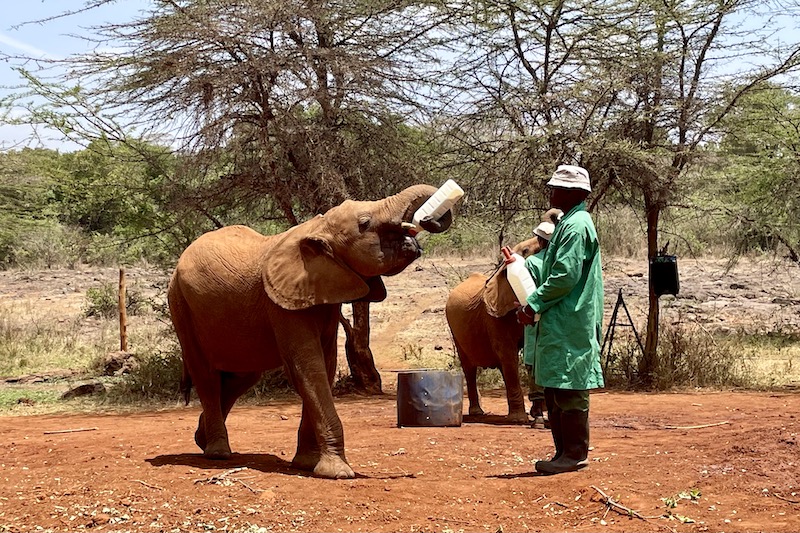

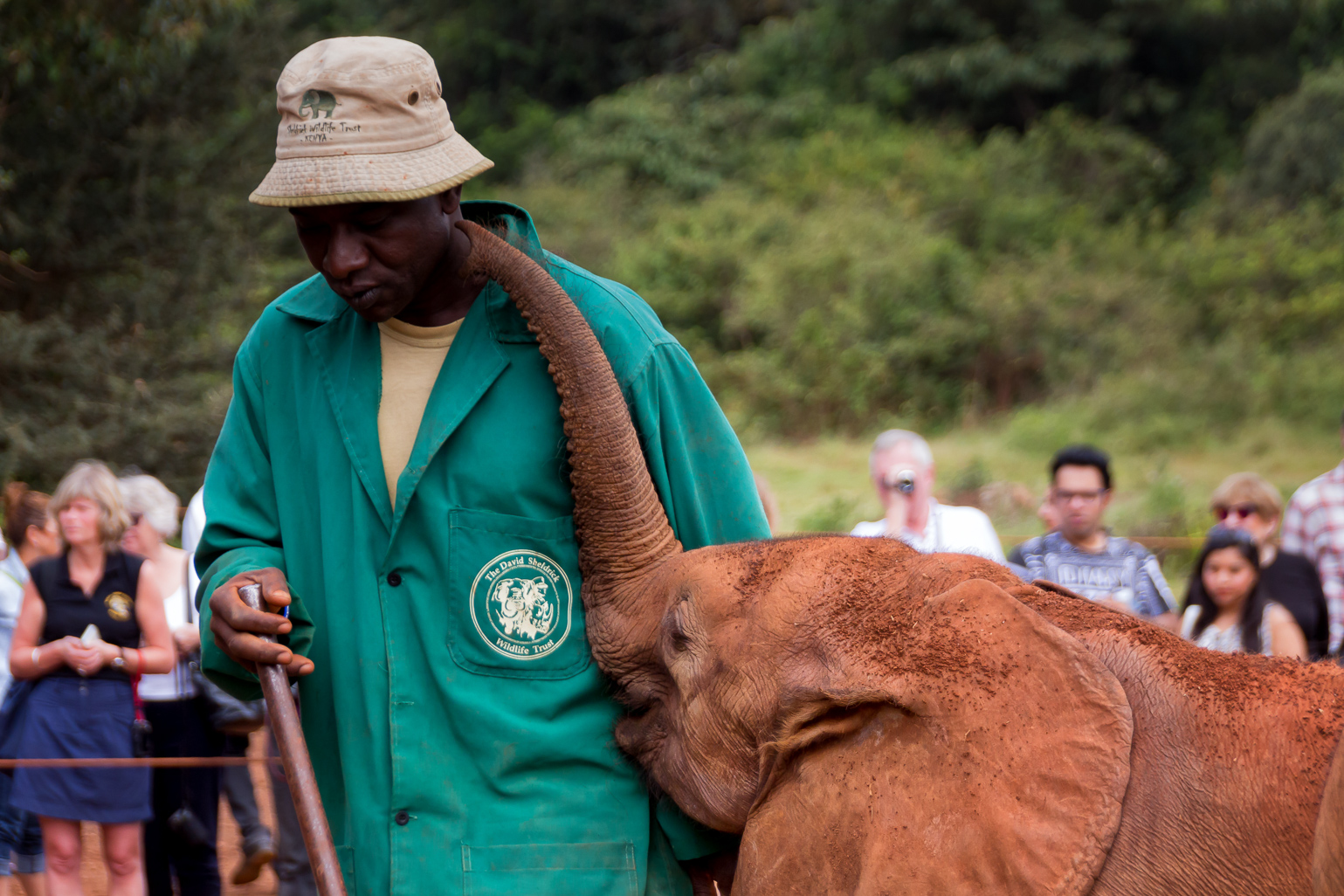
4
The Public Visiting Hour
The orphanage is open to the public once per day, during a limited visiting window.
During this time, visitors:
- Watch baby elephants being bottle-fed
- Observe them playing, running, and mud-bathing
- Hear individual rescue stories read aloud
- Learn about elephant behavior, ecology, and threats
Each elephant has a name, a history, and a distinct personality—making the experience deeply personal.
Why This Experience Is So Powerful
Unlike traditional wildlife viewing:
- You are close enough to see expressions and behavior
- You learn the story behind each animal
- You understand the long-term commitment required to raise an elephant (often 10+ years)
Many visitors describe this as the most memorable part of their time in Nairobi.
Conservation, Not Entertainment
It is important to understand that the Sheldrick Elephant Orphanage is not a zoo.
Key principles:
- Minimal human contact beyond caregivers
- No touching or feeding by visitors
- Strict routines designed for animal welfare
- Long-term reintegration into the wild
The experience is educational, respectful, and conservation-driven.
Elephants, Rhinos & Rehabilitation
Elephants
- Mostly orphaned calves rescued from across Kenya
- Raised in age-based groups
- Eventually moved to reintegration centers in Tsavo and other reserves
Rhinos
Occasionally, orphaned rhinos are also cared for under similar principles, though they are less frequently seen by the public.
Supporting Conservation Through Your Visit
Visiting the orphanage directly supports conservation work.
Visitors can:
- Adopt an elephant (symbolic adoption program)
- Donate to rescue and rehabilitation efforts
- Learn how conservation funding works in practice
Adoption creates a long-term connection, with updates on the elephant’s progress.
Best Time to Visit
Time of Day
- The public visiting hour is fixed and short
- Arrive early to secure entry and good viewing positions
Best Season
- Open year-round
- Dry seasons offer easier access and clearer conditions
- Rainy seasons are greener and often more emotional as rescues increase
How Long to Plan for the Visit
The official visit lasts about one hour, but allow extra time for:
- Entry procedures
- Transport to and from the site
- Combining with nearby attractions
Many visitors pair the orphanage with:
- Nairobi National Park game drives
- Giraffe Centre visits
- Half-day nature itineraries
Practical Visiting Tips
Visitors should:
- Book in advance where possible
- Bring sun protection
- Carry water
- Follow all staff instructions
- Avoid flash photography
Photography is allowed, but respect for animals and staff is essential.
Safety & Accessibility
The orphanage is:
- Safe for solo travelers
- Suitable for families
- Educational for children
- Accessible via ride-hailing or guided tours
Facilities are basic but adequate for the short visit.
Sheldrick Elephant Orphanage vs Other Wildlife Experiences
Visitors often ask how this compares to safaris or zoos.
| Sheldrick Orphanage | Safari Parks |
|---|---|
| Conservation-focused | Wildlife observation |
| Close-range experience | Distant viewing |
| Individual animal stories | Ecosystem-level view |
| Educational narrative | Natural behavior focus |
Both are complementary, not substitutes.