
A Complete Guide to Transport, Traffic, Airports, and Moving Safely & Efficiently
Getting around Nairobi is often the single biggest concern for visitors and new residents—and rightly so. Nairobi is a large, fast-growing, and spatially spread-out city whose transport systems reflect rapid urban expansion rather than long-term, integrated planning.
The good news: Nairobi is manageable once you understand how it moves. This guide explains every major transport option, how traffic actually works, what is safe and practical for visitors, and how to plan your days efficiently without frustration.
How Nairobi City Moves (The Big Picture)
Nairobi was not designed for modern car volumes. Instead, it evolved around:
- A railway line
- Walkable early districts
- Low-density colonial suburbs
- Rapid post-independence population growth
As a result, movement in Nairobi is:
- Time-sensitive (traffic varies dramatically by hour)
- Direction-dependent (some routes jam more than others)
- Zone-based (short trips are easy; cross-city trips are costly in time)
Understanding these three principles is the key to stress-free movement.
Airports: Entering and Leaving Nairobi City



4
Jomo Kenyatta International Airport (JKIA)
Jomo Kenyatta International Airport is Nairobi’s main international gateway and one of Africa’s busiest aviation hubs.
What Visitors Need to Know
- Distance to city center is less important than time of day
- Early mornings and late nights are fastest
- Peak traffic can turn short distances into long journeys
Typical Transfer Times
- Off-peak: 25–45 minutes
- Rush hour: 1.5–2+ hours
Best Transfer Options
- Pre-arranged hotel transfer
- Ride-hailing services
- Chauffeured vehicles
Public transport from the airport is not recommended for first-time visitors.
Wilson Airport
Wilson Airport handles domestic and regional flights, especially safari routes.
Why Wilson Airport Matters
- Much closer to central Nairobi than JKIA
- Main hub for Maasai Mara, Amboseli, and coastal flights
- Short check-in times compared to international airports
Wilson Airport is often used by visitors combining Nairobi with safari destinations.
Transport Options Within Nairobi City
Ride-Hailing (Best Option for Visitors)
Ride-hailing is the most reliable, safest, and simplest way to get around Nairobi for visitors.
Why Ride-Hailing Works Well in Nairobi
- Door-to-door convenience
- GPS navigation
- Cashless payment options
- Reduced risk of price disputes
Best Use Cases
- Airport transfers
- Evening and night travel
- Cross-neighborhood trips
- First-time visits
Expert advice: If unsure, use ride-hailing—it removes most uncertainty.
Matatus and Buses (Public Transport)


4
Matatus
Matatus (privately operated minibuses) form the backbone of Nairobi’s public transport system.
What Visitors Ask Most
- Are matatus safe?
- Should tourists use them?
- How do routes work?
Practical Reality
- Matatus are safe when used with awareness
- Best for short, direct routes during the day
- Not ideal for first-time visitors without local guidance
Matatus are fast, expressive, and deeply embedded in Nairobi culture—but they require confidence and route knowledge.
City Buses
Buses are:
- Slower than matatus
- More predictable
- Less crowded on some routes
They are better suited to longer routes but are still mainly used by residents rather than visitors.
Walking in Nairobi City (Area-Specific)
Walking can be enjoyable and practical—but only in the right contexts.
Where Walking Works Well
- Daytime walking in the CBD (especially for walking tours)
- Selected areas of Westlands
- Parks, forests, and green spaces
- Short walks within residential neighborhoods
Where Walking Is Limited
- Long distances between neighborhoods
- High-speed road corridors
- Late-night walking in unfamiliar areas
Key principle: Nairobi supports short, intentional walks, not wandering across the city.
Driving in Nairobi City


4
Driving is possible but not always advisable for visitors.
Driving Realities
- Aggressive traffic behavior is common
- Lane discipline is flexible
- Traffic congestion can be severe
Should You Rent a Car?
- Short visit → No
- Long stay or frequent out-of-city trips → Possibly
- Business travel → Chauffeured vehicles preferred
Most visitors find ride-hailing or hired drivers far less stressful.
Nairobi Expressway and Major Roads
The Nairobi Expressway has significantly changed movement along the airport–west corridor.
What to Know
- Toll-based system
- Saves time during peak hours
- Not all routes connect directly
Other Major Roads
- Mombasa Road (airport and industry)
- Thika Road (northbound growth corridor)
- Ngong Road and Waiyaki Way (westbound routes)
Understanding which road serves which corridor helps with planning.
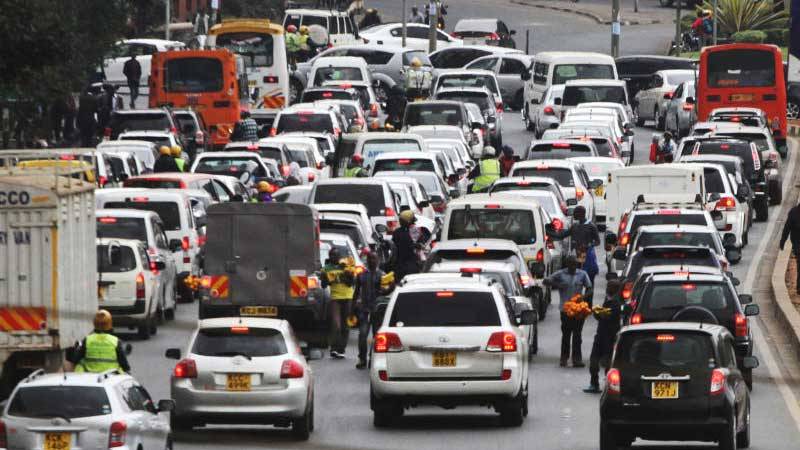
How Bad Is Traffic in Nairobi?


4
Nairobi Rush Hours
- Morning: approx. 6:30–9:30 am
- Evening: approx. 4:30–7:30 pm
During these times:
- Travel times can double or triple
- Short distances take unexpectedly long
Golden Rule
Never cross the city during rush hour unless unavoidable.
Planning Your Days Around Transport
Smart Nairobi Movement Strategy
- Group activities by neighborhood
- Start early for key activities
- Avoid scheduling back-to-back cross-city plans
- Build buffer time into your itinerary
This single approach improves the Nairobi experience dramatically.
Safety and Transport
Is Public Transport Safe?
Yes, with awareness—but visitors should be selective.
Recommended
- Ride-hailing at night
- Daytime walking in known areas
- Guided walking tours
Use with caution
- Matatus during peak rush
- Late-night public transport
Accessibility and Special Needs
- Sidewalks are inconsistent
- Ride-hailing offers best accessibility
- Advance planning recommended for mobility needs
Common Visitor Questions (FAQs)
What is the best way to get around Nairobi City?
Ride-hailing combined with short walks in specific areas.
Is Nairobi traffic really that bad?
It can be during rush hours, but manageable with good timing.
Can tourists use matatus?
Yes, during the day and ideally with local guidance.
Is Nairobi walkable?
Yes in specific districts, not across long distances.
How long should I budget for airport transfers?
30 minutes off-peak, up to 2 hours during rush hour.
Is it safe to travel at night?
Yes, if using ride-hailing or trusted drivers.